Bridging Assessment Layers: Hardware Sensors, Application Evaluations, and Gamer Contributions in Diverse Gaming Environments
Written by Nils Sullivan · Jul 17, 2026
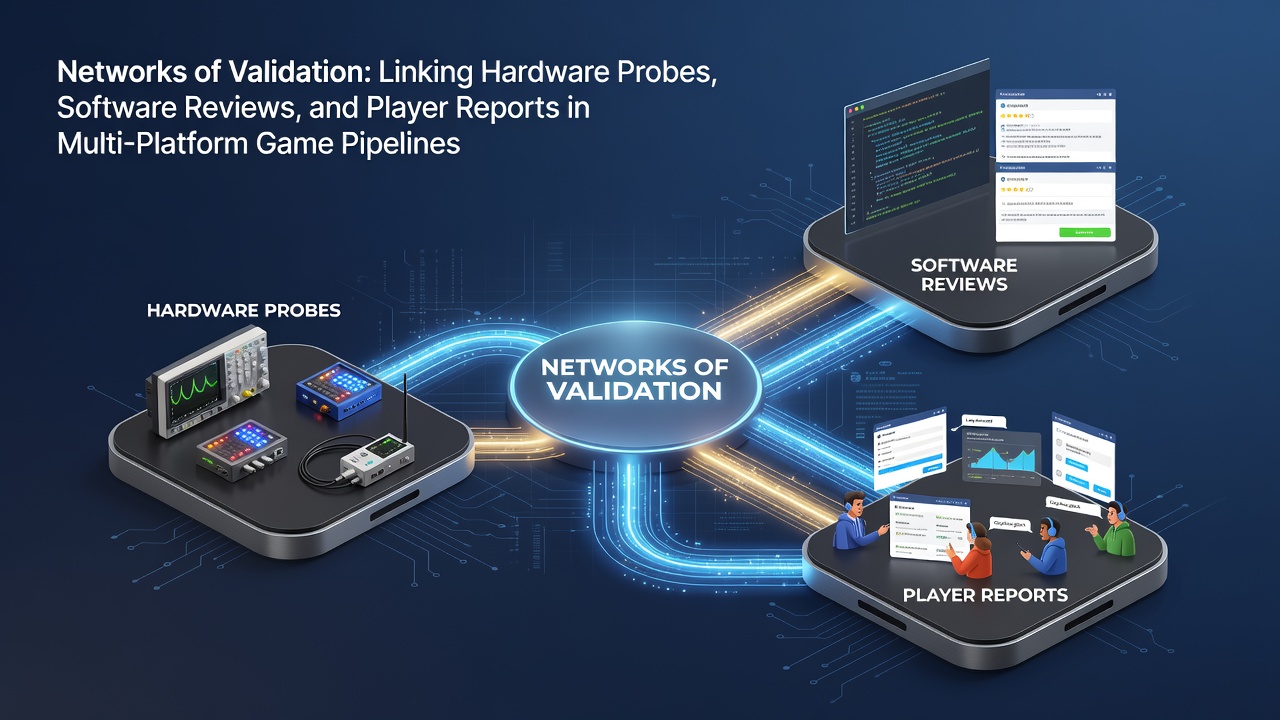
Bridging Assessment Layers: Hardware Sensors, Application Evaluations, and Gamer Contributions in Diverse Gaming Environments
Game development pipelines for multiple platforms rely on networks that connect hardware sensors, application evaluations, and contributions from players to identify issues before release, and these systems operate through coordinated stages where data flows between specialized tools and teams. Hardware sensors detect thermal limits, frame inconsistencies, and power consumption patterns on devices ranging from consoles to mobile units, while application evaluations examine code structure, security protocols, and performance under simulated loads.
Observers note that integration happens when hardware data informs the parameters used in software checks, allowing teams to adjust test cases based on real device behavior recorded during earlier phases. Player contributions enter through structured reporting channels that capture unexpected behaviors across different network conditions and hardware configurations, and these reports often highlight edge cases that automated systems overlook during initial cycles.
Hardware Probes in Multi-Platform Setups
Hardware probes operate by attaching monitoring equipment to target devices during controlled testing sessions, where sensors track metrics such as CPU load distribution and memory allocation under varying graphical settings. Data collected from these probes feeds into centralized dashboards that compare results across console, PC, and handheld platforms, revealing platform-specific bottlenecks that appear only under sustained play sessions lasting several hours.
Research from industry groups shows that probe networks expanded significantly by mid-2026, with development studios adopting standardized sensor arrays compatible with both legacy and current-generation hardware. This expansion allows direct comparison of performance data collected on older processors against newer architectures without requiring separate test environments for each generation.
Software Reviews and Their Role in the Network
Software reviews examine source code and compiled builds through static analysis tools combined with dynamic runtime monitoring, and these processes generate reports that flag potential conflicts with hardware profiles gathered from probe sessions. Teams map review findings to specific device categories, which helps prioritize fixes that address issues appearing across multiple platforms rather than isolated cases.
Application evaluations also incorporate compliance checks against platform certification requirements, where automated scripts verify adherence to memory usage limits and input latency thresholds established by console manufacturers. When combined with hardware probe output, these evaluations produce unified reports that list both code-level problems and their corresponding device performance impacts.
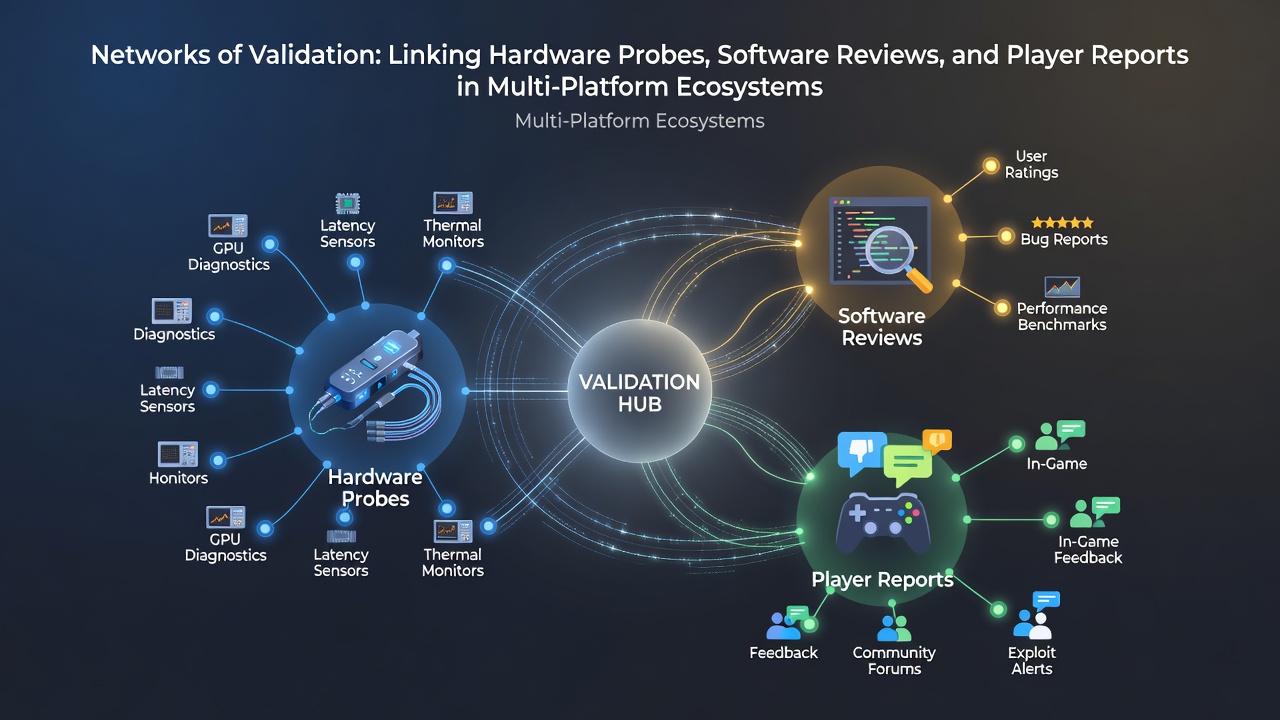
Player Reports Feeding Into Validation Networks
Player reports arrive through in-game feedback systems and external tracking services that log crashes, visual glitches, and control responsiveness issues encountered during public betas and early access periods. These reports undergo categorization based on hardware identifiers and software version numbers, which enables teams to correlate individual player experiences with patterns detected in probe data collected under laboratory conditions.
Studies conducted by academic research centers indicate that aggregation of player input improves detection rates for issues tied to specific regional network configurations or localized device variants. Validation pipelines route categorized player data back to software review teams, who then refine test parameters to reproduce reported conditions in controlled settings.
Integration Mechanisms Across Platforms
Integration occurs through shared databases that store hardware metrics, review outputs, and player observations in linked records, allowing queries that surface connections between device sensor readings and reported gameplay problems. Development teams configure automated alerts that trigger when player report volume exceeds thresholds tied to particular hardware-software combinations identified during earlier probe sessions.
Cross-platform pipelines use middleware layers that translate data formats between console-specific tools and PC-based analysis suites, ensuring consistent interpretation of metrics collected from different operating environments. This translation supports unified certification pathways where final validation requires evidence that hardware, software, and player-derived data align within acceptable parameters.
Conclusion
Networks that link hardware probes, software reviews, and player reports form the foundation for certification in multi-platform game development, and continued refinement of these connections supports more efficient identification of issues across diverse device ecosystems. Data exchange protocols and shared repositories remain central to maintaining alignment between the three validation streams as platform diversity increases.