Certification Blueprints: Weaving Device Scans, Compliance Maps, and Player Signals into Stable Gaming Ecosystems
Written by Zara Vogel · Jun 17, 2026
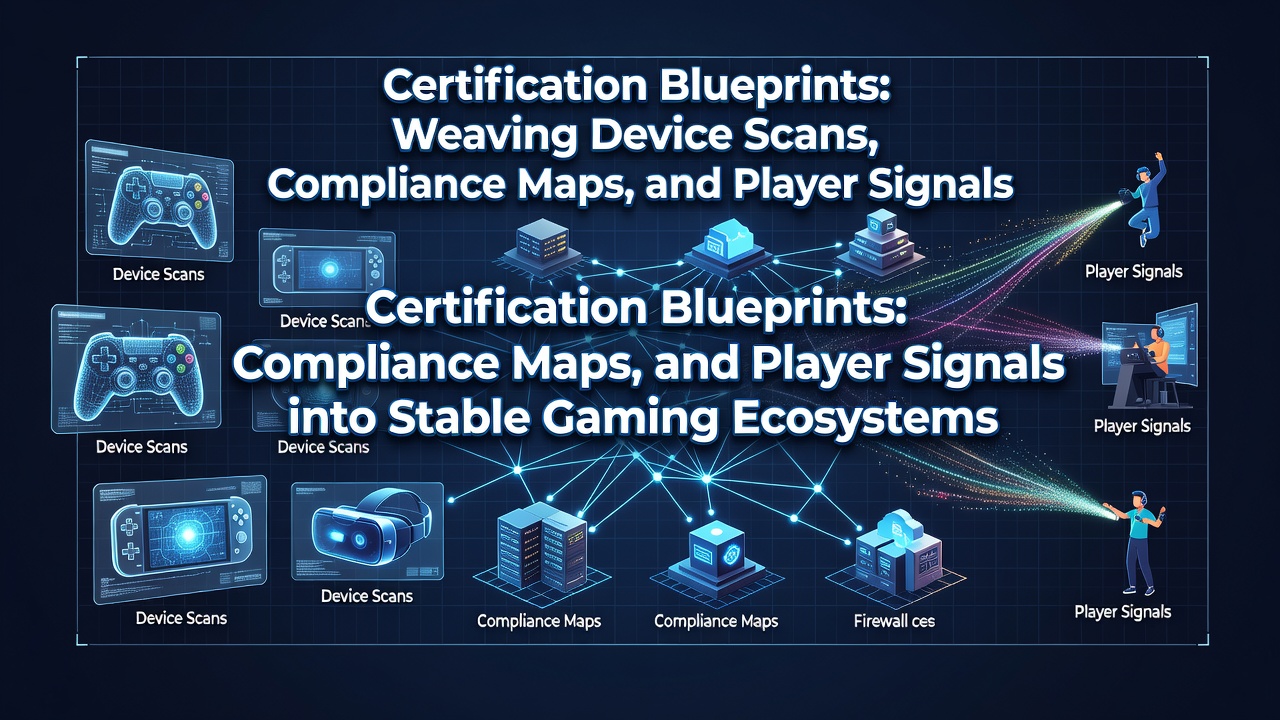
Certification Blueprints: Weaving Device Scans, Compliance Maps, and Player Signals into Stable Gaming Ecosystems
Certification blueprints serve as structured frameworks that combine device scans with compliance maps and aggregated player signals to support consistent performance across gaming platforms, and developers rely on these integrated approaches to address technical variations while meeting regulatory standards in multiple regions.
Device scans examine hardware configurations, operating systems, and peripheral compatibility through systematic testing protocols that identify potential bottlenecks before release cycles begin, while compliance maps outline legal and technical requirements drawn from industry guidelines and government directives that vary by territory.
Device Scans Form the Foundation Layer
Teams conduct device scans using automated tools and manual verification processes that capture data on processor loads, memory allocation, graphics rendering capabilities, and network stability across thousands of hardware combinations, and this information feeds directly into certification pathways where inconsistencies trigger targeted adjustments in code or asset optimization routines.
Research from academic institutions shows that comprehensive device coverage reduces post-launch instability reports by measurable margins, particularly when scans extend beyond flagship models to include mid-range and legacy hardware prevalent in emerging markets.
Compliance Maps Align Technical Requirements
Compliance maps translate regulatory expectations into actionable checkpoints covering data privacy, accessibility features, content classification, and platform-specific store policies, and these maps evolve as new legislation appears in jurisdictions such as the European Union and Australia where digital goods face updated consumer protection rules.
Observers note that synchronization between device scan outputs and compliance documentation prevents certification delays because teams can flag hardware-related issues that intersect with mandated accessibility thresholds or security protocols early in the pipeline.
Player Signals Add Real-World Validation
Player signals arrive through structured feedback channels, telemetry streams, and review aggregation systems that highlight unexpected behaviors under diverse network conditions or controller setups, and analysts process these inputs to refine certification blueprints with empirical usage patterns rather than simulated environments alone.
Data indicates that incorporating player-derived metrics strengthens predictive models for long-term stability, especially when signals reveal edge cases involving regional server infrastructure or language-specific input methods that laboratory testing might overlook.
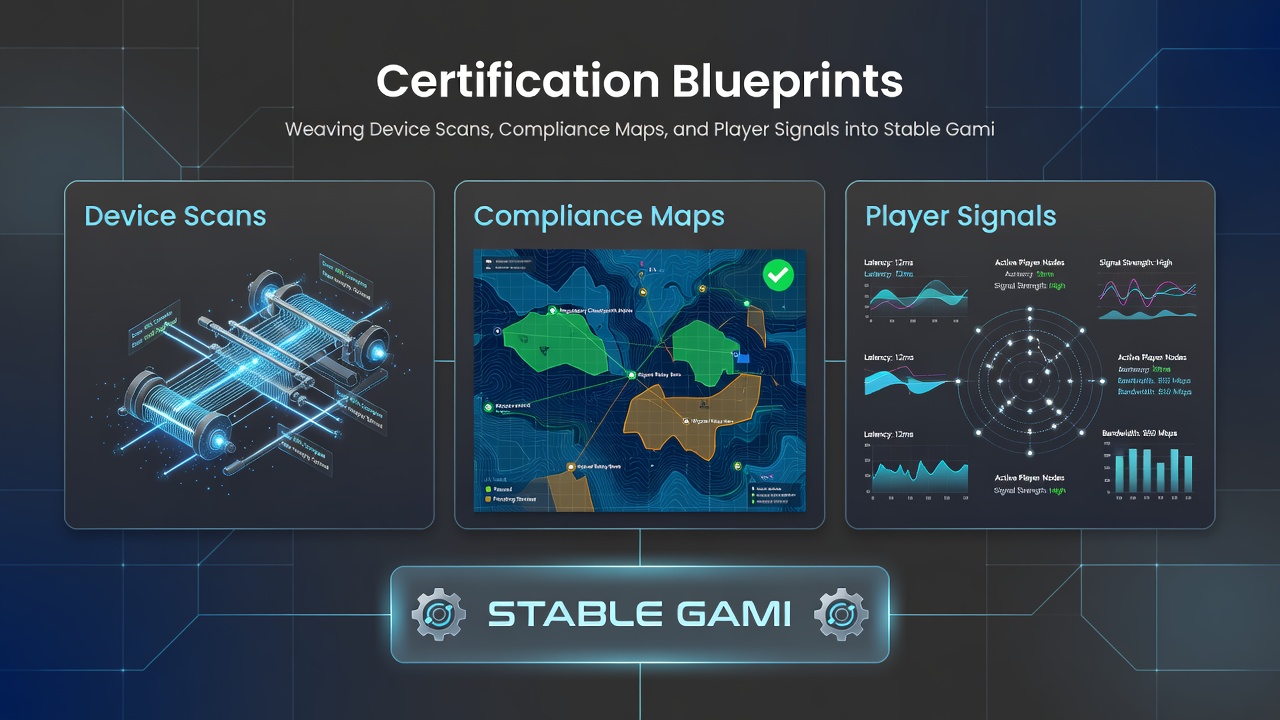
Integration occurs through layered validation webs where device scan results populate compliance matrices and player signals trigger iterative reviews, creating feedback loops that update certification criteria dynamically throughout development milestones.
Cross-Platform Pathways in Practice
Development studios implement these blueprints by establishing centralized dashboards that correlate scan reports with mapped obligations and incoming player data streams, allowing rapid identification of certification blockers across console, mobile, and PC ecosystems simultaneously.
Industry reports from organizations like the Entertainment Software Association highlight how unified frameworks shorten approval timelines when studios maintain continuous alignment between technical diagnostics and evolving platform policies.
By June 2026 updated compliance maps are expected to incorporate new sustainability metrics related to energy consumption during gameplay sessions, and device scan protocols will likely expand to cover emerging hardware categories such as cloud-streaming appliances and portable XR headsets.
Building Resilient Certification Structures
Successful implementations demonstrate that weaving these three elements produces certification outcomes resistant to fragmentation across fragmented hardware landscapes, and teams achieve this by maintaining version-controlled blueprint repositories that document every scan parameter alongside corresponding compliance references and player signal thresholds.
Academic studies on software quality assurance further support the observation that interconnected validation systems outperform isolated testing regimes because they surface interactions between hardware constraints and regulatory demands that single-domain approaches frequently miss.
Conclusion
Certification blueprints continue to evolve as essential coordination mechanisms that bind device-level diagnostics, regulatory mapping, and player-derived intelligence into cohesive pathways supporting stable gaming ecosystems across global markets, and ongoing refinements ensure these structures adapt to shifting hardware realities alongside regulatory updates without disrupting release schedules.