Certification Webs in Gaming: Tracing Links Between Compliance Checks, Performance Metrics, and Review Aggregation
Written by Zara Vogel · Aug 26, 2026
Certification Webs in Gaming: Tracing Links Between Compliance Checks, Performance Metrics, and Review Aggregation
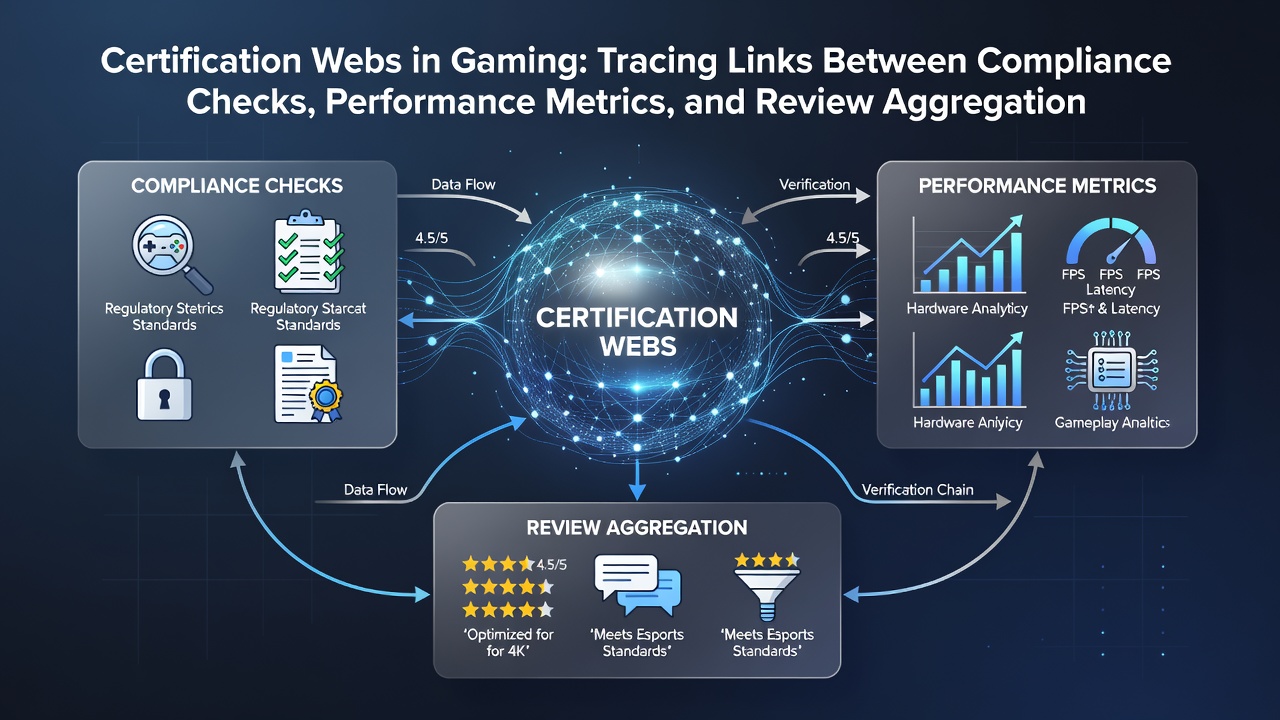
Certification processes in gaming weave together compliance checks, performance metrics, and review aggregation into dense networks that determine whether titles reach market, and those networks grow tighter each development cycle. Developers submit builds to multiple layers of evaluation where regulatory standards intersect with technical benchmarks and aggregated player sentiment, and the outcome shapes release schedules across platforms.
Mapping the Core Components
Compliance checks cover content ratings, accessibility mandates, and regional distribution rules enforced by bodies such as the Entertainment Software Rating Board in North America and the Australian Classification Board. Performance metrics track frame rates, load times, memory usage, and stability under stress, while review aggregation pulls data from Metacritic scores, Steam user ratings, and post-launch feedback systems. Observers note that these three strands rarely operate in isolation; instead, low performance numbers can trigger additional compliance scrutiny, and poor aggregated reviews can prompt re-examination of certification documentation.
Performance Metrics as Gatekeepers
Platform holders require minimum performance thresholds before granting certification, and studios document frame consistency across target hardware configurations. Data from industry reports shows that titles failing to maintain 30 frames per second on specified devices must undergo optimization passes before resubmission, and those iterations often coincide with renewed compliance reviews. Researchers have tracked how memory leaks or thermal throttling detected during stress testing can delay final sign-off, particularly when the same issues surface in cross-platform validation.
Review Aggregation Feeding Back into Certification
Aggregated review data increasingly informs certification pathways because publishers monitor sentiment scores during closed betas and early access periods. When user scores dip below established thresholds, developers often receive requests for additional audits focused on stability or content compliance. Figures from European gaming trade groups reveal that several 2025 titles underwent extended certification after early review aggregation flagged recurring crash reports, prompting fresh hardware evaluations on both console and PC configurations.
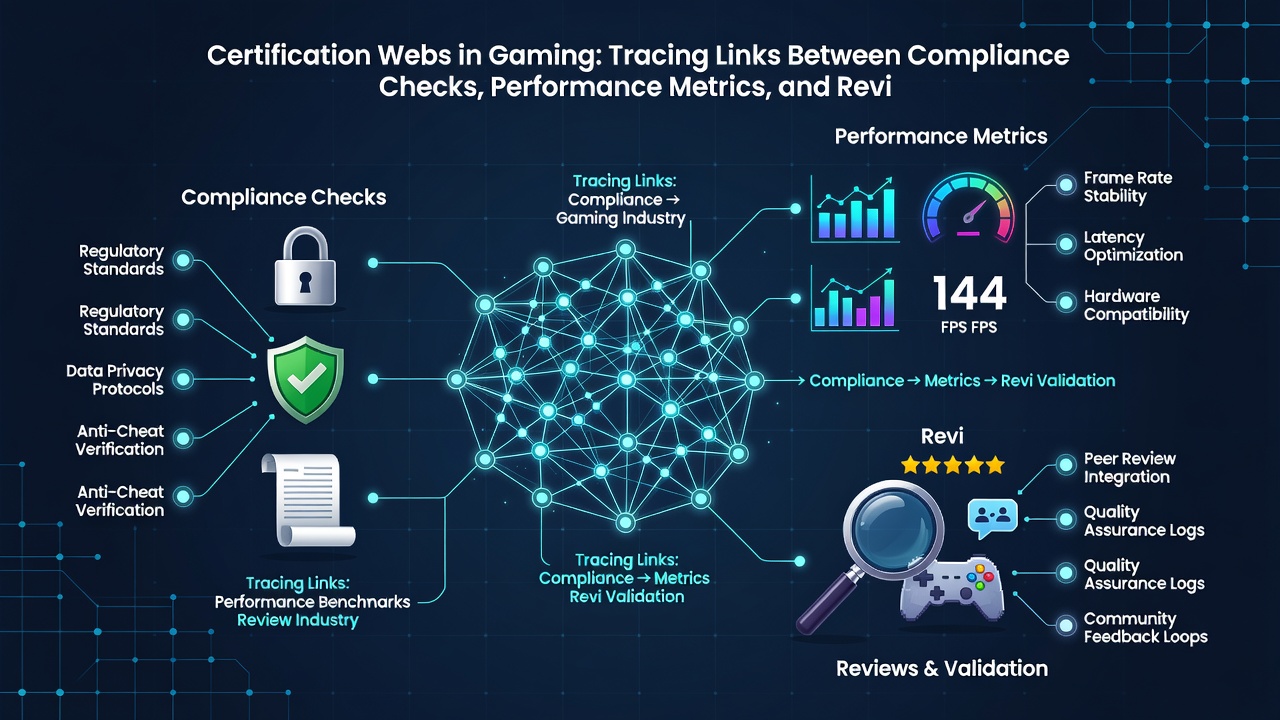
Those who've studied certification timelines observe that review aggregation rarely stands alone; it serves as an early warning system that loops back into the compliance and performance layers. One case involved a multiplayer title where aggregated reports of input lag on specific controllers triggered re-testing against updated performance metrics, and the subsequent compliance documentation had to reference both the original and revised test results.
Intersections Across Development Pipelines
Cross-platform projects demonstrate the densest certification webs because each storefront applies its own combination of checks. A game cleared for console distribution may still face additional performance validation on PC storefronts, and review aggregation from one platform can influence certification decisions on another. In August 2026, updated accessibility guidelines scheduled for rollout across multiple regions will require fresh compliance mapping that incorporates performance data from adaptive controller testing, tightening the existing connections between these evaluation layers.
Academic studies on virtual environment stability have documented how aggregated review patterns predict areas where compliance documentation requires extra detail. When users consistently report texture streaming issues, for example, certification bodies may request supplementary performance logs and revised content descriptions before final approval. This pattern repeats across genres, from action titles to simulation games, where technical metrics and player sentiment jointly shape the certification record.
Conclusion
Certification webs in gaming continue to expand as compliance checks, performance metrics, and review aggregation exchange data at every stage of development. The resulting networks determine release viability and influence post-launch support decisions across global markets. Tracking these linkages provides clearer insight into how modern titles achieve certification and maintain standing after launch.