Community Signals Guiding Compliance Checks for New Game Launches
Written by Zara Vogel · Jul 19, 2026
Community Signals Guiding Compliance Checks for New Game Launches
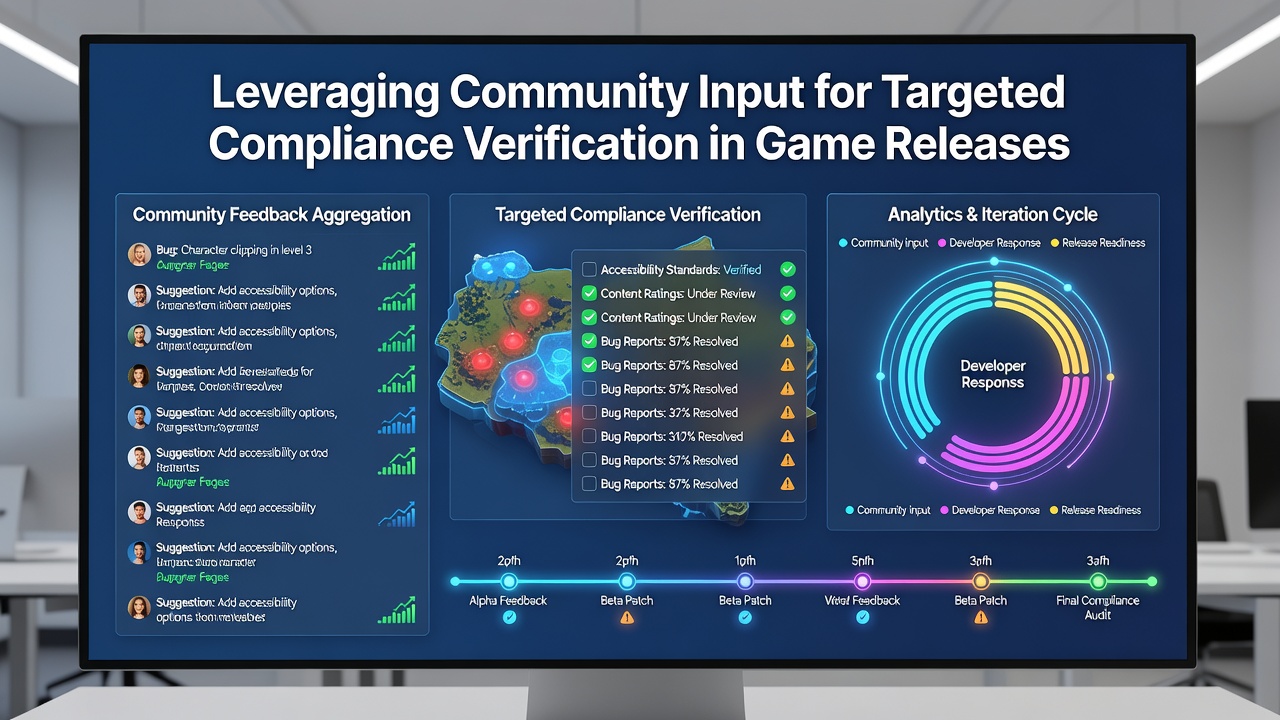
Developers have turned to player communities as a practical resource for identifying compliance gaps before titles reach wider distribution, and data from multiple platform reports shows that aggregated user observations often surface regional regulatory issues faster than internal reviews alone. In July 2026 several updated content classification rules took effect across major markets, prompting teams to map feedback patterns against specific policy requirements rather than relying solely on automated scans.
How Player Reports Align With Regulatory Frameworks
Community input reaches developers through structured channels such as dedicated feedback portals, in-game reporting tools, and public discussion threads, while analysts cross-reference these submissions against standards maintained by bodies like the Entertainment Software Rating Board in the United States and the Australian Classification Board. Patterns emerge when multiple users flag similar concerns about accessibility features, age-appropriate descriptors, or regional content restrictions, allowing teams to prioritize verification steps that match documented regulatory criteria instead of broad checklists.
Studies conducted by academic groups at institutions including the University of Alberta have tracked how clusters of player reports correlate with later compliance adjustments, revealing that titles incorporating early community signals reduced post-launch revision cycles by measurable margins. Those findings appear in peer-reviewed papers examining cross-platform release data from 2024 through mid-2026.
Targeted Verification Processes Built on Aggregated Signals
Once reports accumulate, specialized teams apply filters that isolate submissions tied to verifiable compliance categories such as data privacy disclosures, loot-box probability statements, or subtitle accuracy requirements. This filtering step narrows the scope of manual audits to areas where user volume exceeds established thresholds, creating focused workstreams rather than exhaustive re-examinations of every title asset.
Industry associations including the Entertainment Software Association have published guidance documents that outline recommended thresholds for escalating community signals into formal compliance reviews. These documents emphasize quantitative triggers, including minimum report counts per region and consistency across multiple languages, which help studios allocate testing resources where regulatory exposure appears highest.

Integration With Existing Certification Pathways
Certification bodies continue to require formal documentation packages, yet several now accept supplementary community-derived datasets as supporting evidence during review windows. When developers present summarized feedback logs alongside traditional test matrices, reviewers gain additional context for evaluating whether stated compliance measures match actual player experiences across different hardware configurations and network conditions.
Platform operators such as those managing major digital storefronts have adjusted their submission portals to accept optional community-impact summaries, and statistics released by these operators indicate that titles supplying such summaries encounter fewer follow-up queries during the final approval phase. The summaries typically list categorized issues, response rates from development teams, and verification outcomes without replacing required legal attestations.
Geographic Variations in Feedback Utilization
Regional differences shape how community input informs compliance work. European studios often align aggregated reports with GDPR-related transparency obligations, whereas teams targeting North American markets focus more heavily on state-level consumer protection statutes and rating descriptor accuracy. Canadian regulators have issued clarification notes on digital purchase disclosures that reference player-submitted examples as illustrative cases during policy consultations.
Teams operating across multiple jurisdictions therefore maintain separate tagging systems that route incoming reports to the relevant regulatory mapping tables, ensuring that verification priorities reflect the strictest applicable standard for each distribution territory. This segmented approach prevents dilution of signals that matter only within specific legal frameworks.
Conclusion
Community-derived data now functions as an early-warning layer within broader compliance verification sequences for game releases. By mapping aggregated player observations against documented regulatory requirements, development groups concentrate verification efforts on areas where real-world usage diverges from intended policy alignment. Continued refinement of filtering methods and clearer integration points with certification bodies are expected to sustain this practice as release volumes and regulatory detail both increase.