Connecting Player Sentiment Networks to Validation Standards in Interactive Media Pipelines
Written by Devon Schröder · Aug 16, 2026
Connecting Player Sentiment Networks to Validation Standards in Interactive Media Pipelines
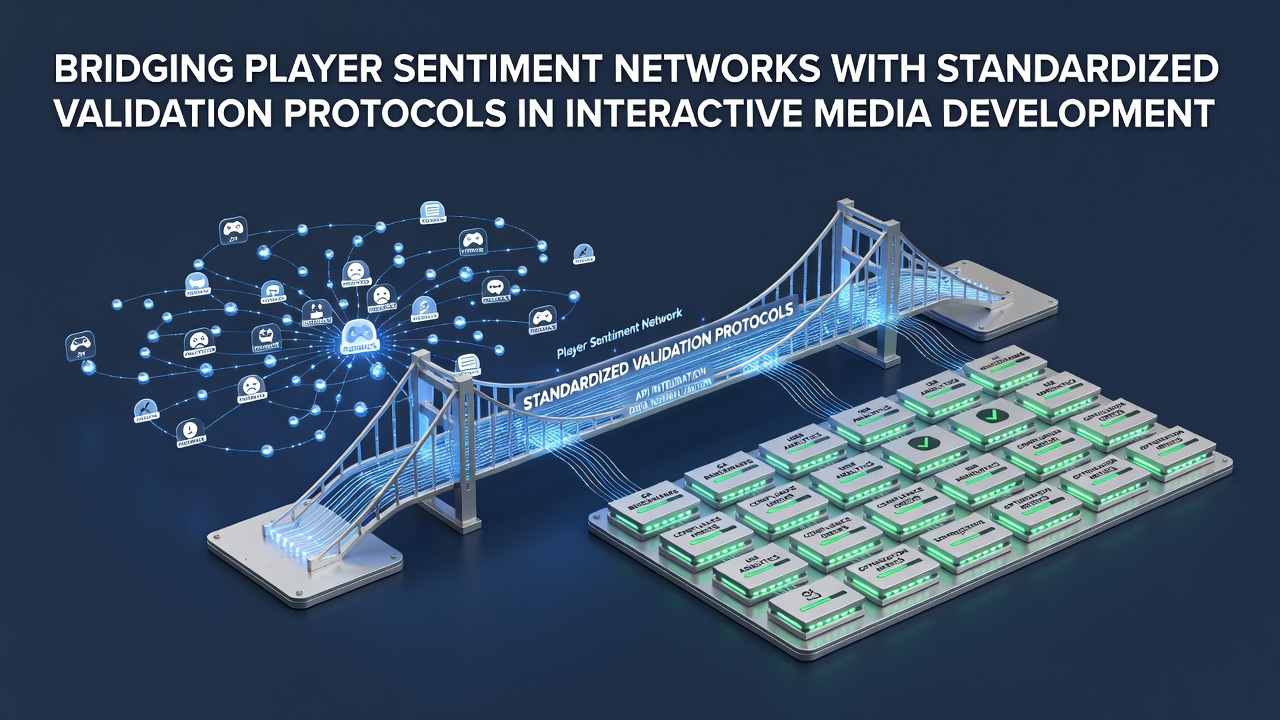
Interactive media development teams now integrate player sentiment networks with standardized validation protocols to align user experiences across platforms, and data from multiple regions shows increasing adoption of these combined approaches in 2025 and into 2026. Sentiment networks collect aggregated feedback from forums, social platforms, and in-game telemetry, while validation protocols establish uniform criteria for testing usability, performance, and compliance. Researchers at institutions in Europe and North America have documented how these elements intersect to reduce discrepancies between intended designs and actual player responses.
Mapping Sentiment Collection Methods
Developers gather sentiment through structured data pipelines that pull from review aggregators, community boards, and real-time interaction logs, and organizations such as the Entertainment Software Association report rising investment in tools that process this information at scale. In practice, teams apply natural language processing models trained on datasets from Asia-Pacific markets alongside those from North America to identify patterns in player reactions. These models flag recurring themes such as navigation friction or reward system balance, and the outputs feed directly into validation checkpoints that measure whether updates meet predefined benchmarks. Observers note that this mapping process gained momentum after regulatory updates in Canada and Australia emphasized consumer protection metrics in digital entertainment products released during late 2025.
Standardized Validation Frameworks in Practice
Validation protocols draw from established guidelines including those issued by the International Organization for Standardization and regional bodies, creating measurable thresholds for accessibility, stability, and content consistency. Teams apply these frameworks during iterative build cycles, running automated checks followed by targeted human reviews that incorporate sentiment signals. For instance, a spike in negative feedback about control responsiveness triggers a protocol-defined stress test on target hardware configurations, with results logged against compliance scores. Data from university-led studies in the United Kingdom and Japan indicate that studios adopting unified protocols see faster resolution of cross-platform variances compared with ad-hoc approaches. The process remains iterative, with each validation round updating the sentiment network inputs to refine future predictions.
Integration Points Across Development Stages
Early concept phases now include baseline sentiment modeling drawn from similar titles, while mid-production cycles embed validation gates that cross-reference live player data against protocol requirements. Late-stage certification incorporates aggregated sentiment trends to confirm that final builds address previously identified concerns. In August 2026, several major platforms plan to roll out updated submission portals that require explicit documentation of sentiment-to-validation linkages, reflecting policy shifts observed in both the European Union and Singapore. Engineers coordinate these steps through shared dashboards that display sentiment heat maps alongside protocol compliance percentages, allowing rapid adjustments before release. Case examples from mid-sized studios in South Korea demonstrate how this integration shortened certification timelines by aligning feedback loops with standardized audit trails.
Regional Variations and Data Sharing
North American developers often prioritize telemetry volume from console ecosystems, whereas European counterparts emphasize privacy-compliant sentiment aggregation under existing data protection rules. Australian research groups have published comparative analyses showing how localized sentiment thresholds influence validation stringency across genres. Shared repositories managed by industry consortia allow teams to reference anonymized datasets, reducing redundant testing and supporting consistent application of protocols worldwide. Figures from academic consortia reveal that collaborative data exchanges increased by measurable margins between 2024 and 2025, correlating with fewer post-launch adjustments in titles that followed integrated workflows.
Technical Infrastructure Supporting the Bridge
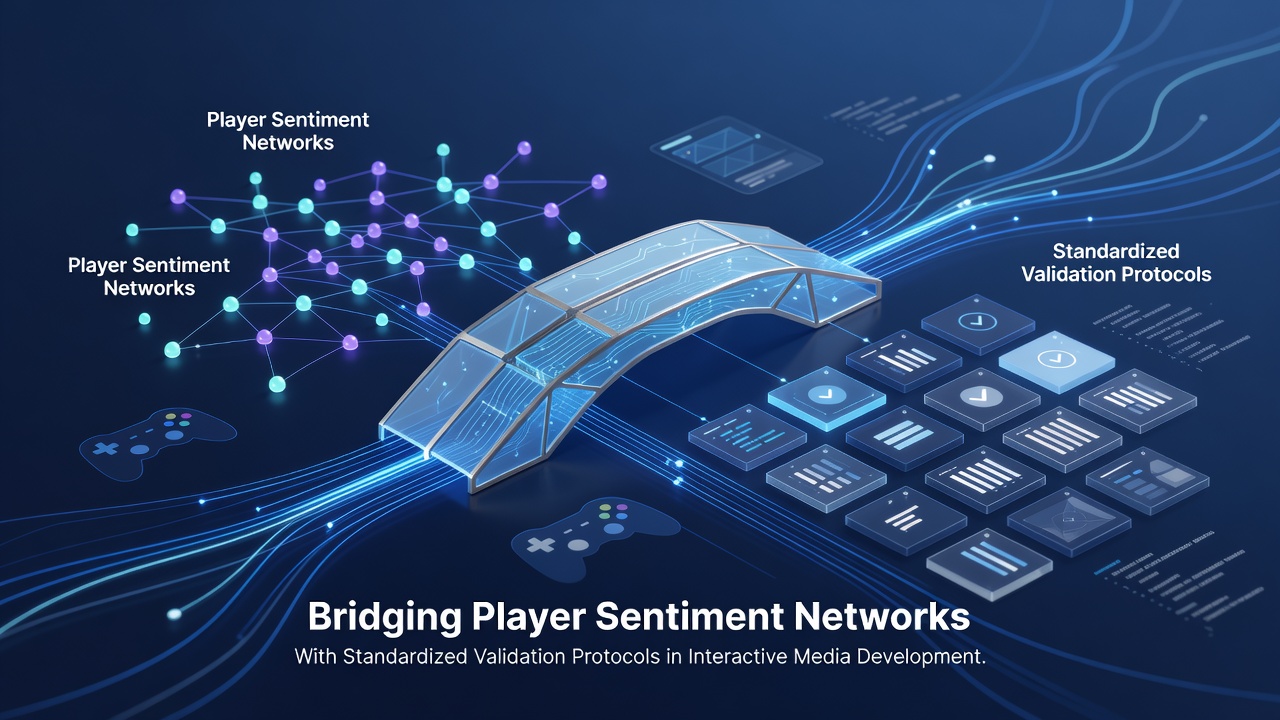
Modern pipelines rely on modular software layers that translate raw sentiment scores into protocol-compatible metrics, using APIs that connect community platforms to internal testing suites. Automated scripts parse incoming feedback, assign weighted values based on recency and source reliability, and route flagged items to the appropriate validation module. Hardware-in-the-loop simulations then verify that proposed fixes satisfy both player expectations and standardized criteria. Those who maintain these systems report that version control practices now track changes to both sentiment models and protocol parameters in unified repositories, ensuring traceability throughout the project lifecycle.
Conclusion
Bridging player sentiment networks with standardized validation protocols continues to reshape interactive media development by creating traceable connections between user input and compliance requirements. Evidence from multiple continents indicates sustained growth in these practices through 2026, supported by evolving platform policies and cross-regional research efforts. Teams that maintain clear linkages between the two domains position their projects for smoother certification and broader player alignment across diverse markets.