Cross-Platform Certification Webs: How Audits, Feedback, and Scans Converge for Release Readiness
Written by Devon Schröder · Jul 31, 2026
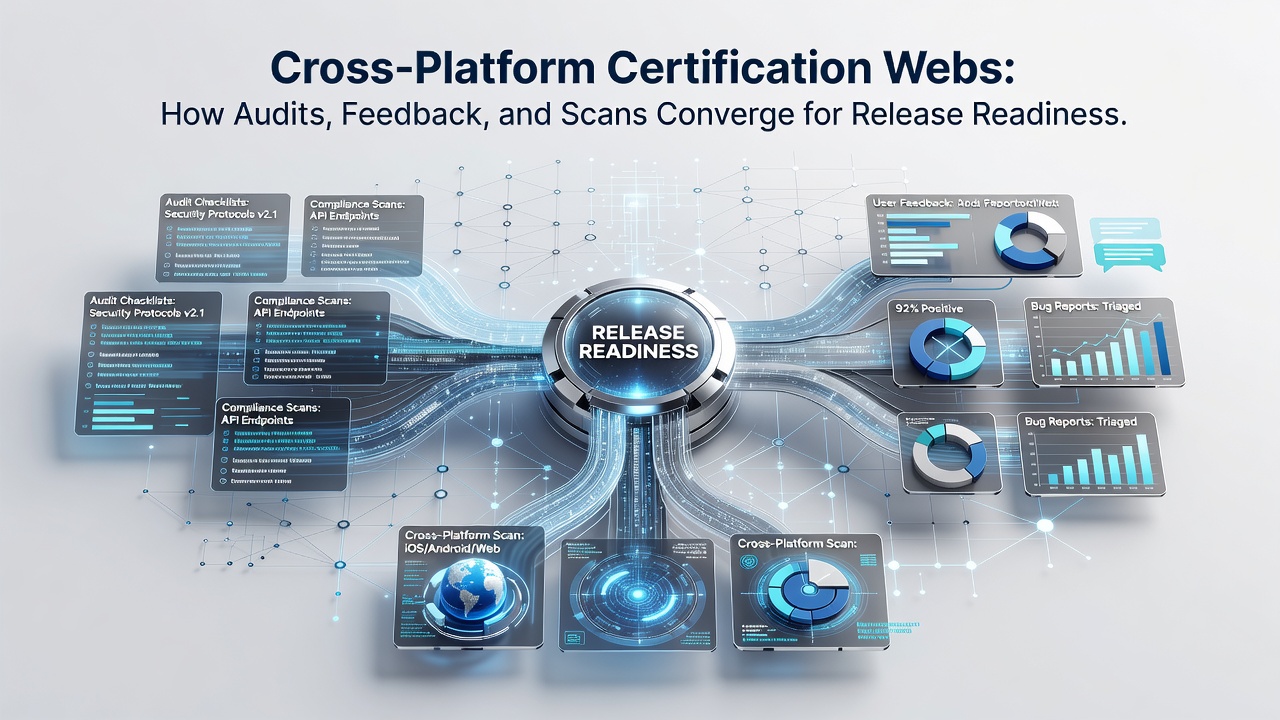
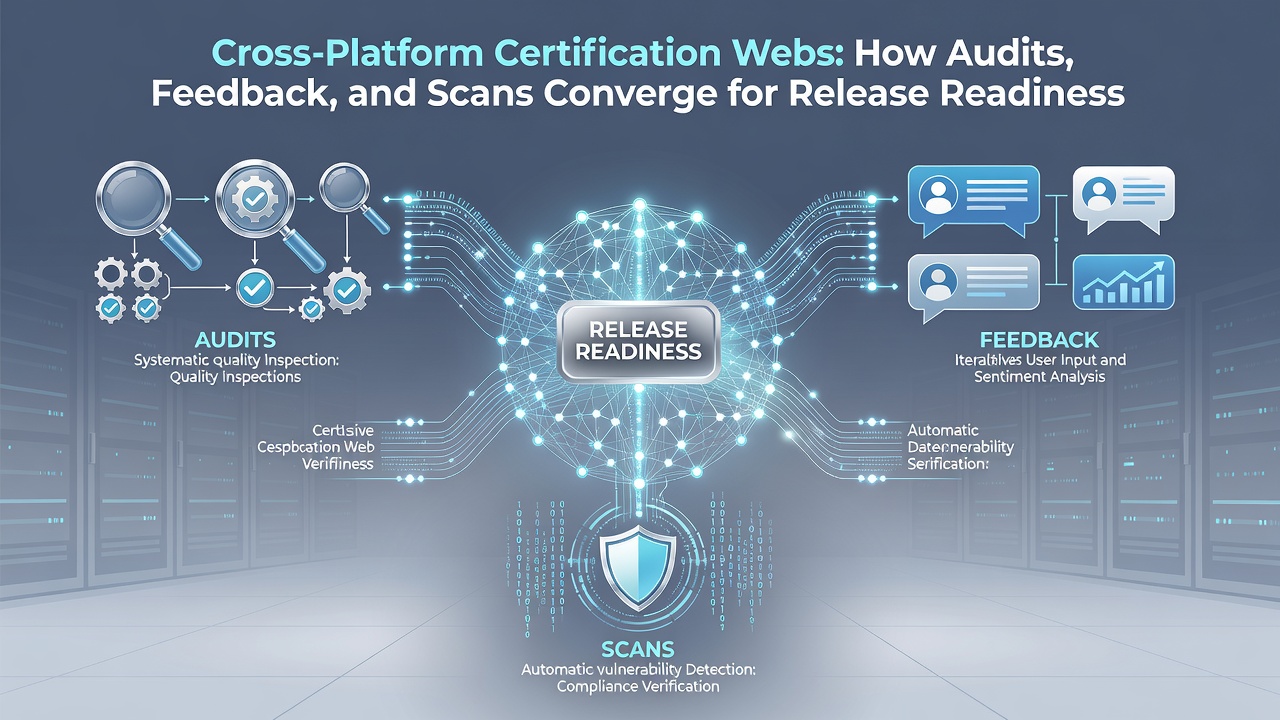
Cross-Platform Certification Webs: How Audits, Feedback, and Scans Converge for Release Readiness
Cross-platform game releases require coordinated systems that bring together audits, feedback collection, and device scans to determine release readiness, and developers track these elements through structured certification pathways that span multiple hardware configurations and operating environments. Research indicates that integrated validation processes reduce compatibility failures by aligning software checks with real-world usage data gathered from diverse player bases.
Audits as Foundation Layers
Software audits examine code stability, security vulnerabilities, and compliance with platform-specific requirements while hardware evaluations measure performance across consoles, PCs, and mobile devices. Observers note that these audits occur in phases, beginning with internal reviews and extending to third-party assessments that verify adherence to standards set by console manufacturers and app store operators. Data from industry reports shows that audit frequency increases during the final months before launch as teams address issues identified in earlier cycles.
Those who've studied release timelines find that audit results feed directly into certification decisions, creating documented trails that regulators and platform holders review before approving distribution. In July 2026, updates to cross-platform compliance frameworks are expected to emphasize automated audit tools that flag inconsistencies across operating systems in real time.
Feedback Integration Mechanisms
User feedback enters the certification web through structured channels such as beta testing programs, post-launch patch monitoring, and aggregated review analysis from multiple storefronts. Researchers discovered that combining quantitative metrics from telemetry with qualitative reports from players produces more accurate pictures of stability than either approach alone. Teams often map feedback patterns to specific device configurations, revealing issues that lab-based scans might overlook.
Studies show that feedback loops accelerate when developers connect player reports to audit findings, allowing rapid prioritization of fixes that affect the broadest range of hardware. One case involved developers who correlated crash logs from thousands of mobile sessions with audit data on memory management, leading to targeted optimizations that improved certification scores.
Device Scans and Performance Validation
Device scans systematically test game builds on representative hardware combinations, measuring frame rates, load times, and thermal behavior under controlled conditions. According to the Entertainment Software Association, expanding hardware diversity in 2025 increased the number of required test configurations by 40 percent for major titles. Scans generate datasets that certification bodies use to confirm that performance meets published thresholds across regions.
Those monitoring industry practices observe that scan results gain additional value when cross-referenced with feedback from early access participants, since real-world network conditions and user settings often differ from laboratory environments. This convergence allows teams to adjust certification criteria based on empirical evidence rather than assumptions.
Convergence Points in Certification Pathways
Audits, feedback, and scans intersect at defined checkpoints where teams compile evidence packages for platform review. European Games Developer Federation documentation outlines how aggregated input from these sources supports compliance mapping across different regulatory jurisdictions. Certification pathways therefore function as webs rather than linear sequences, with each strand reinforcing the others.
Figures reveal that projects employing centralized dashboards to visualize audit status, feedback trends, and scan outcomes achieve faster resolution of blocking issues. In practice, these dashboards highlight correlations, such as recurring performance drops on specific chipsets that align with user complaints gathered during closed betas.
Release Readiness Indicators
Release readiness emerges when audit reports show no critical violations, feedback volumes indicate acceptable stability thresholds, and scan results confirm performance parity across supported platforms. Industry organizations track these indicators through standardized reporting formats that enable comparison across titles and studios. Data indicates that titles reaching these thresholds experience fewer day-one patches and lower rates of post-launch certification revocations.
Developers who maintain continuous monitoring of all three inputs can predict certification outcomes with greater precision, adjusting development priorities weeks before final submission deadlines. This approach proves especially relevant for simultaneous multi-platform launches where staggered releases are not feasible.
Conclusion
Cross-platform certification webs operate through the continuous interaction of audits, feedback systems, and device scans that collectively determine whether a game meets release standards. Evidence from multiple sources demonstrates that projects integrating these components produce more consistent results across diverse hardware ecosystems. As frameworks evolve in 2026 and beyond, the emphasis remains on traceable, data-driven convergence points that support reliable distribution decisions.