Feedback Mapping in Indie Hardware: From User Data Clusters to Certification Milestones
Written by Nils Sullivan · Aug 26, 2026
Feedback Mapping in Indie Hardware: From User Data Clusters to Certification Milestones
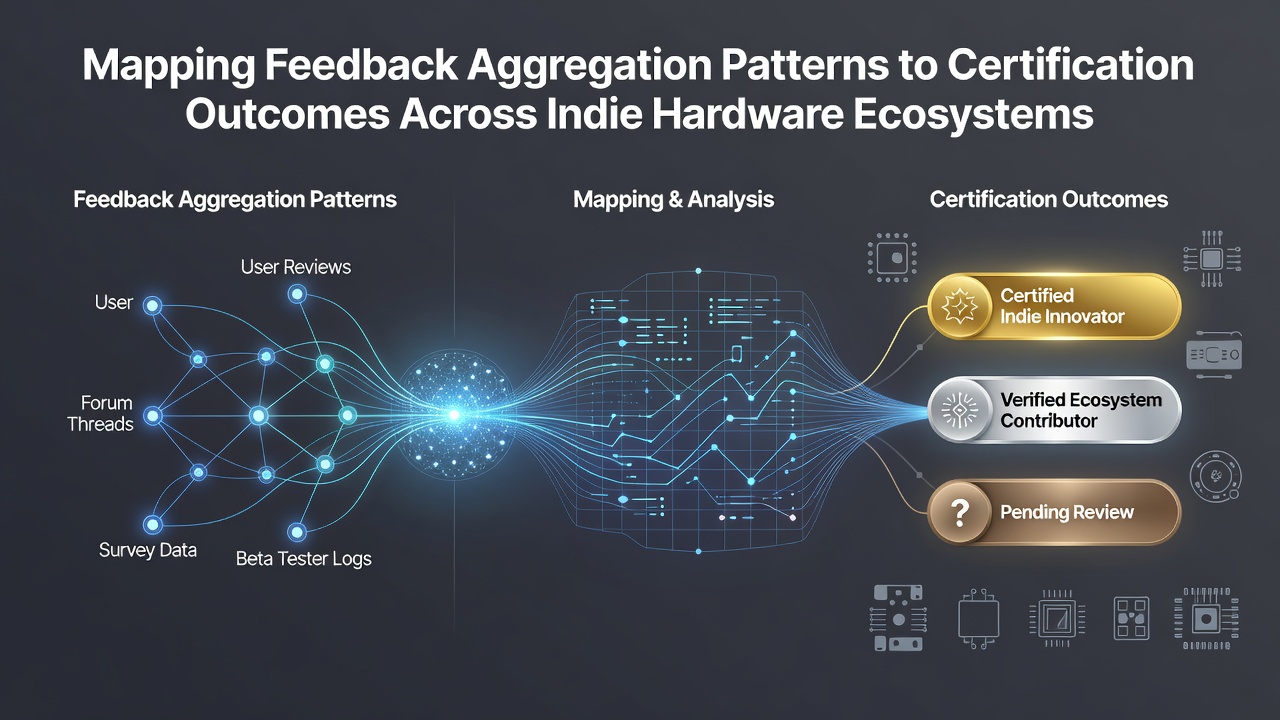
Indie hardware ecosystems encompass small-scale manufacturers producing devices such as custom controllers, portable gaming rigs, and modular consoles that operate outside major corporate supply chains, and these groups rely on structured feedback aggregation to align product iterations with certification requirements. Data collection occurs through review platforms, support tickets, and community forums where individual reports combine into pattern clusters that highlight recurring performance or compatibility issues, while certification bodies evaluate those same clusters against safety, electromagnetic compatibility, and interoperability standards.
Researchers at institutions across multiple regions have documented how aggregation tools process thousands of user inputs into heat maps that reveal priority areas for hardware revisions, and these visualizations often correlate directly with successful certification passes when manufacturers address the most frequent complaint categories before submission. In practice, teams that sort feedback by severity and frequency achieve higher rates of first-time approval because the aggregated data provides clear evidence of compliance testing outcomes rather than isolated anecdotes.
Core Components of Feedback Aggregation in Indie Settings
Hardware developers in indie environments typically integrate inputs from beta testers, online marketplaces, and post-purchase surveys into centralized databases that apply clustering algorithms to group similar reports, and this process surfaces trends such as thermal throttling under extended play sessions or wireless latency spikes in specific network conditions. The resulting patterns then feed into certification workflows where auditors cross-reference the data against benchmarks established by regulatory frameworks in different jurisdictions, including those maintained by Canadian and Australian authorities that emphasize consumer device reliability metrics.
One case tracked a cluster of overheating reports across multiple device batches, and after targeted firmware adjustments the aggregated follow-up data showed a measurable drop in the same issue category, which aligned with passage of thermal safety evaluations required for market entry. Such sequences demonstrate the practical linkage between input aggregation methods and downstream certification results without relying on subjective interpretation.
Certification Pathways and Data Correlation Mechanisms
Certification outcomes in these ecosystems depend on documented evidence that aggregated feedback has informed design changes, and standards organizations require manufacturers to present summaries of user-reported issues alongside laboratory test results that confirm resolution. European regulatory sources outline similar expectations for electromagnetic interference testing, where repeated interference complaints from users trigger additional validation rounds before final approval. Patterns emerging from aggregated inputs therefore serve as predictive indicators for which certification tests will demand the most attention during the evaluation phase.
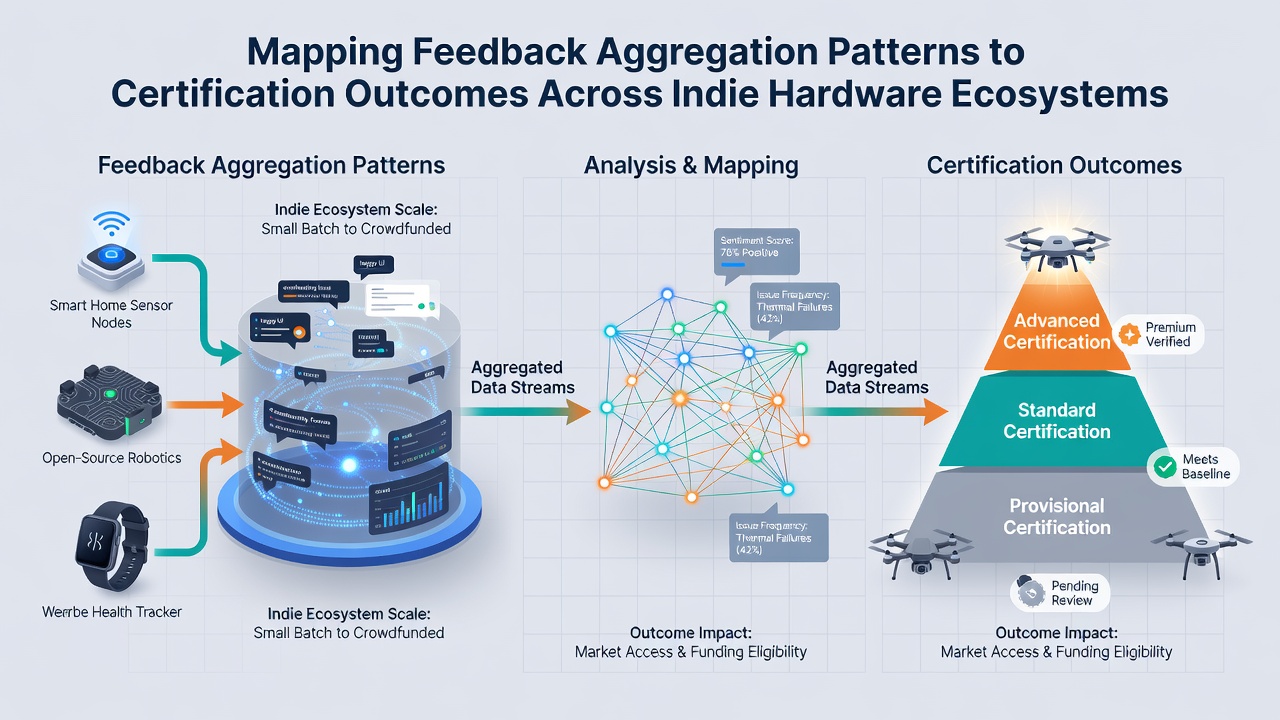
Industry reports from August 2026 indicate that platforms supporting real-time aggregation dashboards have enabled faster iteration cycles, with several indie projects completing certification within shorter timelines after implementing structured data mapping protocols. Observers note that devices whose feedback clusters center on connectivity or power management issues show stronger alignment between pre-certification fixes and final compliance verification when compared to projects lacking systematic aggregation practices.
Cross-Platform Variations in Indie Hardware Ecosystems
Different indie hardware categories exhibit distinct feedback aggregation signatures that influence certification trajectories, and portable units tend to generate higher volumes of battery and thermal data points while stationary modules produce more reports on input lag and peripheral compatibility. These variations require tailored mapping approaches so that certification submissions include evidence addressing the dominant pattern types for each device class. Trade associations focused on consumer electronics have published guidance encouraging standardized data formats that allow auditors to trace aggregated inputs through to resolved test cases.
Academic studies examining multiple indie hardware launches found consistent statistical relationships between the volume of addressed feedback clusters and the number of certification iterations required, and projects that mapped high-frequency issues early recorded fewer supplemental testing requests from oversight bodies. This pattern holds across regions where certification frameworks prioritize user safety and performance consistency data.
Conclusion
Mapping feedback aggregation patterns to certification outcomes provides indie hardware teams with a repeatable method for aligning user-derived data with regulatory expectations, and continued refinement of these linkages supports more efficient pathways through evaluation processes. The documented connections between clustered inputs and successful compliance verification continue to shape development practices across independent device ecosystems.