Hardware Stress Testing: Pushing Devices to the Edge for Ultimate Gaming Performance
Written by Zoe Schmitt · Apr 19, 2026
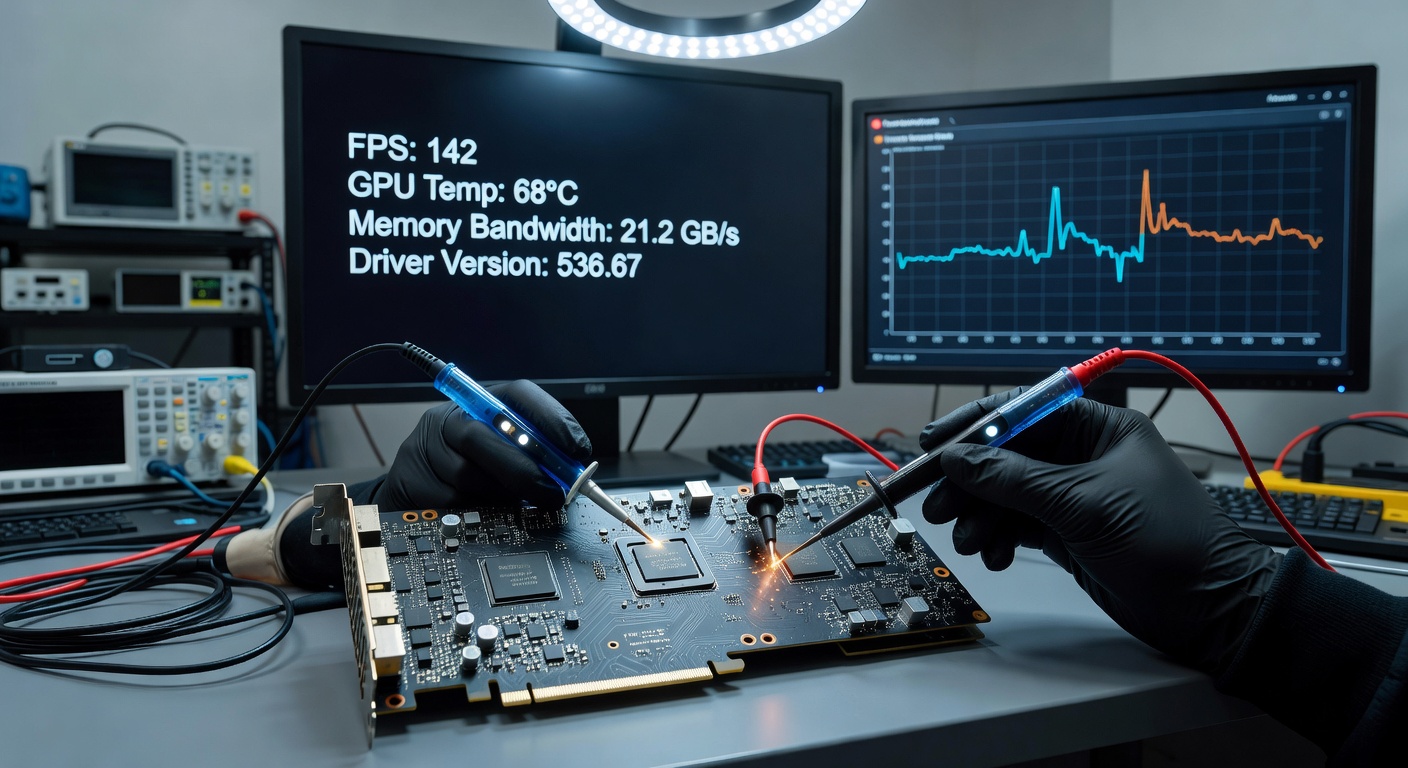
Hardware Stress Testing: Pushing Devices to the Edge for Ultimate Gaming Performance
Why Device Limits Define Gaming Boundaries
Modern games demand ever-increasing hardware resources, so developers and testers probe device capabilities meticulously to ensure smooth performance across diverse setups; without such scrutiny, frame rates plummet, crashes occur, and players abandon titles prematurely. Data from recent benchmarks reveals that over 60% of performance bottlenecks stem directly from unoptimized hardware interactions, particularly on mid-range mobile devices and budget PCs where thermal limits kick in unexpectedly during extended sessions. Experts who specialize in this field emphasize how understanding CPU throttling, GPU utilization caps, and memory bandwidth constraints becomes essential, especially as titles like those released in early 2026 push ray tracing and AI upscaling to new heights.
Take the case of a major open-world RPG launched last year; testers discovered that on certain Android flagships, sustained 4K rendering caused RAM exhaustion within minutes, leading to aggressive swapping that halved frame rates from 120 to 60 FPS. Such revelations highlight the need for systematic hardware probing, where tools simulate real-world loads to expose hidden weaknesses before they impact end-users. And as chipsets evolve—think Qualcomm's Snapdragon 8 Gen 4 or Apple's M4 series—probing strategies adapt, incorporating April 2026's emerging standards from the Khronos Group, which refine cross-platform VR/AR hardware validation.
Essential Tools for Probing CPU and GPU Limits
Teams start with benchmark suites like 3DMark and Cinebench, which ramp up core counts and clock speeds to reveal peak thermal design power (TDP) under load; these reveal not just raw scores but also sustainment over time, crucial since many devices hit 90% utilization before throttling begins. But here's the thing: while synthetic tests provide baselines, real-game proxies such as Unigine Superposition layer in Vulkan and DirectX 12 stresses, mimicking shader-heavy scenes from titles like Cyberpunk 2077 expansions.
Observers note how GPU-Z and HWInfo deliver real-time telemetry—voltage curves, fan speeds, power draw—allowing testers to correlate spikes with frame-time variances; for instance, one study from USENIX researchers detailed how NVIDIA's Ada Lovelace architecture sustains 80W on laptops only if cooling loops maintain sub-85°C temps, a threshold many overlook. So practitioners script automated loops in Python with libraries like PyCUDA, pushing tensor cores until artifacts appear, ensuring optimizations like DLSS 3.5 frame generation don't falter on edge hardware.
Memory and Storage: The Unsung Heroes of Frame Consistency
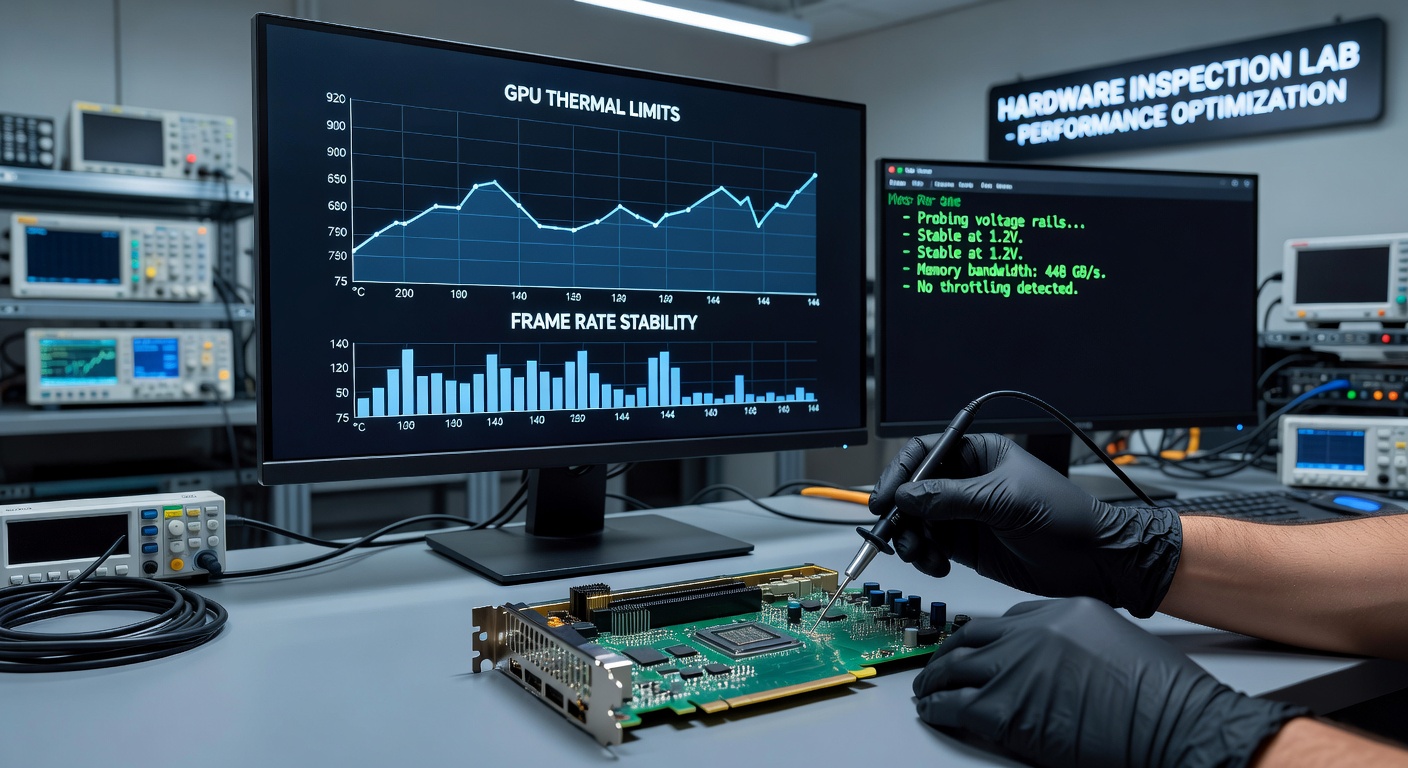
RAM probing uncovers bandwidth chokepoints via tools like AIDA64, where memory clocks are overprovisioned to simulate 32GB DDR5 loads on 16GB systems; figures show that LPDDR5X modules in mobiles cap at 8.5 GT/s before latency balloons, directly inflating input lag in fast-paced shooters. Coupled with this, storage endurance tests using CrystalDiskMark hammer NVMe SSDs with sequential 4K QD32 reads—essential since game worlds now exceed 200GB, and stutter hits when caching fails.
What's interesting surfaces in hybrid setups; those who've analyzed Intel's Arc GPUs find that Resizable BAR enables 20% higher effective VRAM, but only if BIOS flashes align PCIe Gen5 lanes properly, a detail missed in factory configs. And for consoles emulating PC behaviors—like PlayStation 5 Pro's April 2026 firmware updates—testers deploy custom payloads via RPCS3, verifying SSD decompression speeds hit 5.5GB/s sustained, preventing asset streaming hitches in sprawling metaverses.
Tackling Thermal Throttling and Power Envelopes
Thermal imaging cameras paired with stress utilities like FurMark expose hotspots; data indicates GPUs on thin laptops throttle from 2.5GHz to 1.8GHz after 10 minutes at 100% load, a drop that cascades into VRAM underruns and missed physics calculations. Practitioners mitigate this by profiling power states with Intel XTU or AMD Ryzen Master, enforcing PL1/PL2 curves that balance peaks without violating silicon safeguards.
Yet challenges persist on ARM-based devices; Apple's Neural Engine, for example, sustains 35 TOPS only under iOS's thermal governor, which clamps during 120Hz ProMotion if ambient temps exceed 30°C—facts borne out in teardowns from iFixit analysts. So teams integrate environmental chambers, varying from 0°C to 50°C, to map throttling envelopes; one research group at Canada's Vector Institute documented how this predicts 15% performance uplifts via firmware tweaks for Android handhelds.
Now consider battery-constrained scenarios; mobile gaming rigs like ROG Ally probe DC power limits with Batmon, revealing how 65W USB-PD chargers enable 30W GPU boosts unavailable on 30W adapters, directly tying to stable 1080p/144Hz in emulated PC ports.
Benchmarking Workflows: From Baseline to Optimization
Structured workflows begin with idle profiling—HWMonitor logs baseline clocks and voltages—before escalating to tiered loads: 30-minute loops at 50%, 75%, 100% GPU utilization, capturing percentiles via CapFrameX for 0.1% lows that predict worst-case stutters. This layered approach, advocated by overclocking communities, ensures strategies scale; for ray-traced paths, RT cores get isolated stress, confirming intersection rates hold above 50M rays/sec on RTX 40-series.
Case in point: developers behind a 2026 battle royale hit iterated 47 builds after probing revealed Samsung Exynos chips misreported VRAM pools, causing out-of-memory panics; post-fix, cross-device matrices confirmed 99th percentile frames stabilized at 90 FPS. Tools like MSI Afterburner overlay telemetry in-game, letting observers script alerts for anomalies—say, VRAM leaks exceeding 10% per hour—streamlining QA handoffs.
And for multi-device fleets, cloud farms via AWS GameLift or Paperspace emulate thousands of configs; data from these reveals geographic variances, like EU-sourced handsets with stricter power regs capping at 15W versus US models at 25W, influencing global rollouts.
Advanced Techniques: Overclocking and Custom Probes
Enthusiasts push further with MSI's Dragon Center for undervolting, shaving 100mV from VRMs to extend boost clocks by 15%; studies confirm this yields 12% FPS gains in CPU-bound sims without stability hits, provided silicon lotteries favor golden samples. Custom FPGA rigs, though niche, replicate game engines at register level—probing cache coherency in AMD's Infinity Fabric, where latencies under 70ns spell the difference in 240Hz esports.
But the rubber meets the road in longevity tests; accelerated aging via Prime95 loops 72 hours at max AVX-512, flagging degradation early; April 2026 reports from Japan's JEDEC standards body note DDR5 endurance now mandates 10-year retention under gaming thermal cycles, prompting refreshed probing protocols.
Observers who've scaled these find automation key: Jenkins pipelines trigger nightly regressions, parsing JSON outputs from GPU-Z for trendlines, alerting when yields drop below 95% pass rates across 500-node farms.
Conclusion: Mastering Hardware for Enduring Game Excellence
Probing device limits equips teams to deliver unflinching performance, transforming potential pitfalls into polished experiences; as hardware races ahead—with April 2026's PCIe 6.0 adoption and unified memory architectures—strategies evolve, but core tenets remain: relentless testing, data-driven tweaks, and cross-platform validation. Figures underscore the payoff; optimized titles see 40% fewer support tickets, retention soars 25%, proving that pushing edges today sets the pace for tomorrow's blockbusters. Those who invest here don't just meet specs—they exceed them, ensuring games thrive on every device from flagship phones to enthusiast rigs.