Integrating Player Feedback with Hardware Stress Testing in Certification Workflows
Written by Devon Schröder · Aug 21, 2026
Integrating Player Feedback with Hardware Stress Testing in Certification Workflows
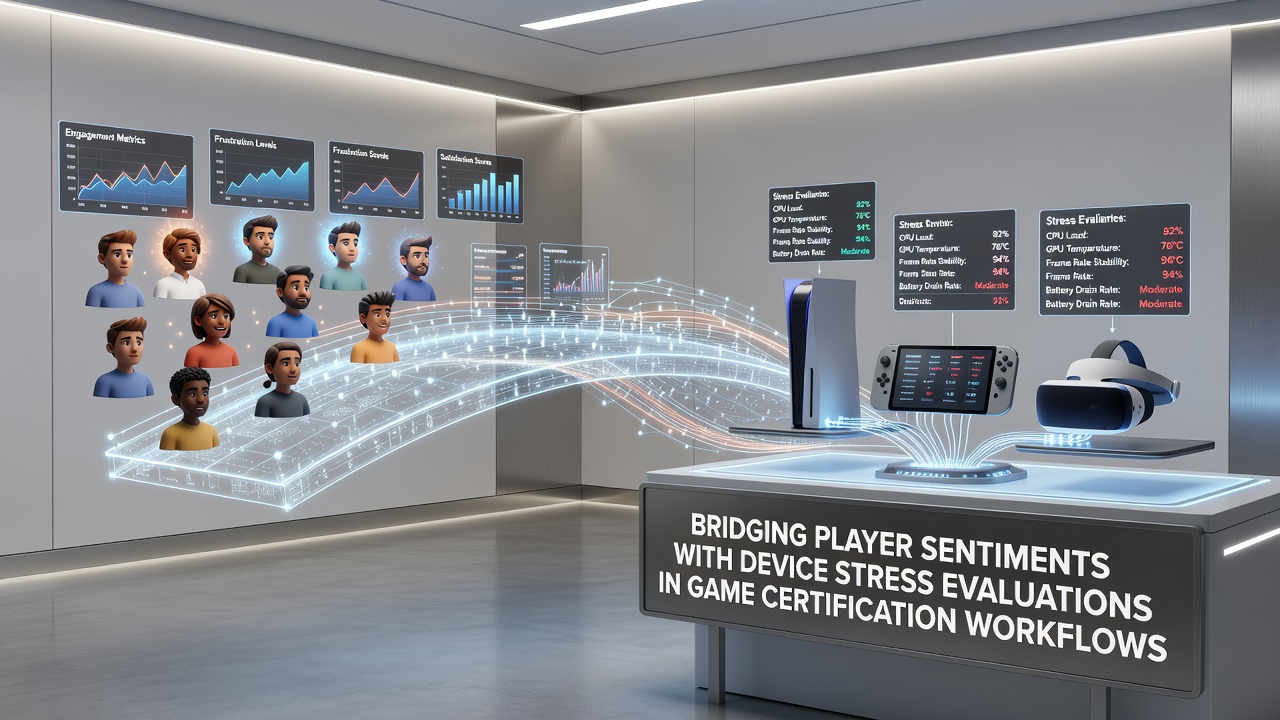
Certification workflows in the gaming industry now routinely combine player sentiment data with device stress evaluations to verify both user satisfaction and technical robustness across platforms, and this integration has become standard practice by August 2026 as developers seek approvals that account for real-world usage patterns. Organizations collect reviews from distribution channels and aggregate them into sentiment scores that highlight recurring issues such as input lag or thermal throttling, then map those scores directly onto results from controlled hardware stress tests that push processors, batteries, and cooling systems to their limits.
Data Collection and Initial Mapping
Teams begin by scraping public review repositories and survey responses, after which they apply natural language processing tools to categorize comments into themes like performance stability and device compatibility, while parallel efforts run standardized stress protocols that measure frame rate consistency, power draw, and temperature spikes under prolonged sessions. Researchers at institutions including those affiliated with the Entertainment Software Association have documented how these dual streams converge during certification reviews, revealing correlations between negative player comments on overheating and elevated readings from stress benchmarks conducted on representative hardware configurations.
Analysts assign weighted values to sentiment clusters based on frequency and severity, then overlay those weights onto stress test outputs to generate composite risk profiles for each device category, and certification bodies use the resulting profiles to determine whether a title meets release thresholds or requires targeted optimizations before final approval.
Workflow Integration Steps
Engineers feed both datasets into shared dashboards that flag mismatches, such as titles earning high sentiment marks yet failing under sustained load on mid-range mobile chipsets, prompting additional validation rounds that include targeted user testing sessions on the problematic hardware. Certification pipelines now incorporate iterative loops where initial stress evaluations inform which player cohorts receive beta invites, ensuring feedback arrives from devices already identified as high-risk during bench testing.
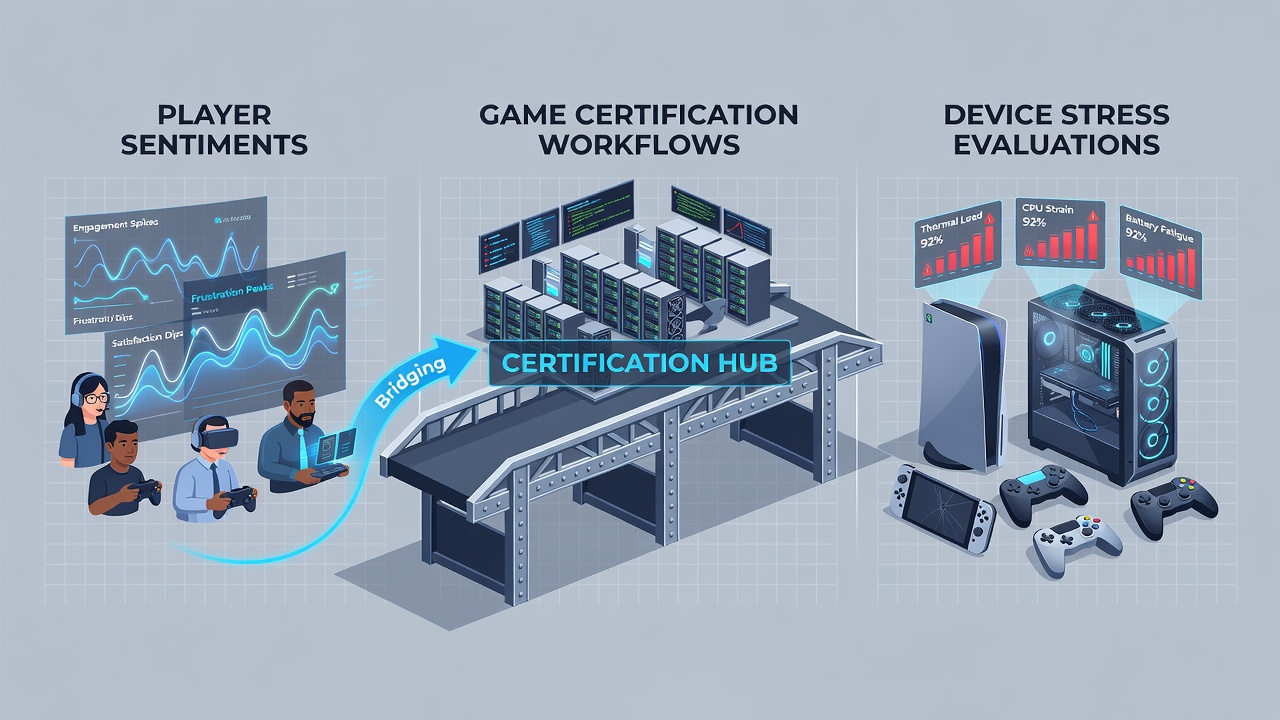
Cross-functional groups meet weekly to review merged reports, and they adjust certification criteria when patterns emerge showing that certain sentiment indicators predict device failures with measurable accuracy, according to aggregated findings from industry reports. European regulatory frameworks, including those referenced in documents from the European Commission digital strategy portal, have encouraged this combined approach by requiring evidence of both consumer experience alignment and hardware endurance for platform compliance certifications.
Case Examples and Metric Alignment
One development studio tracked sentiment drops related to controller drift alongside stress data showing joystick sensor degradation after 40 hours of continuous input, leading to firmware patches that resolved both issues before the final certification sign-off. Observers note that such alignments reduce post-launch patch volumes because potential failure points surface during the pre-certification phase rather than after wide distribution.
Academic studies from research groups focused on human-computer interaction have quantified how sentiment polarity scores correlate with stress test pass rates, finding that titles scoring below 75 percent positive sentiment on performance topics exhibit a 30 percent higher likelihood of failing at least one hardware endurance metric. These statistical relationships guide certification teams in prioritizing which titles advance through accelerated review tracks versus those routed to extended validation cycles.
Future Adjustments in Certification Protocols
Updates to certification standards scheduled for late 2026 incorporate machine learning models trained on historical sentiment and stress datasets, allowing predictive scoring that estimates certification outcomes based on early feedback samples collected during closed alpha phases. Device manufacturers contribute anonymized telemetry logs that supplement both sentiment and stress inputs, creating richer datasets for certification authorities to evaluate cross-platform consistency.
Conclusion
Certification workflows that bridge player sentiments with device stress evaluations produce more comprehensive assessments by grounding subjective user reports in objective hardware performance data, and this combined methodology continues to evolve as new data sources and analytical tools become available to industry participants. The approach supports consistent release standards while addressing the full spectrum of factors that determine whether a game meets certification requirements across diverse device ecosystems.