Layered Validation Webs: How Device Scans, Compliance Mapping, and Aggregated Input Drive Certification Pathways in Cross-Platform Development
Written by Frankie Schmitz · May 31, 2026
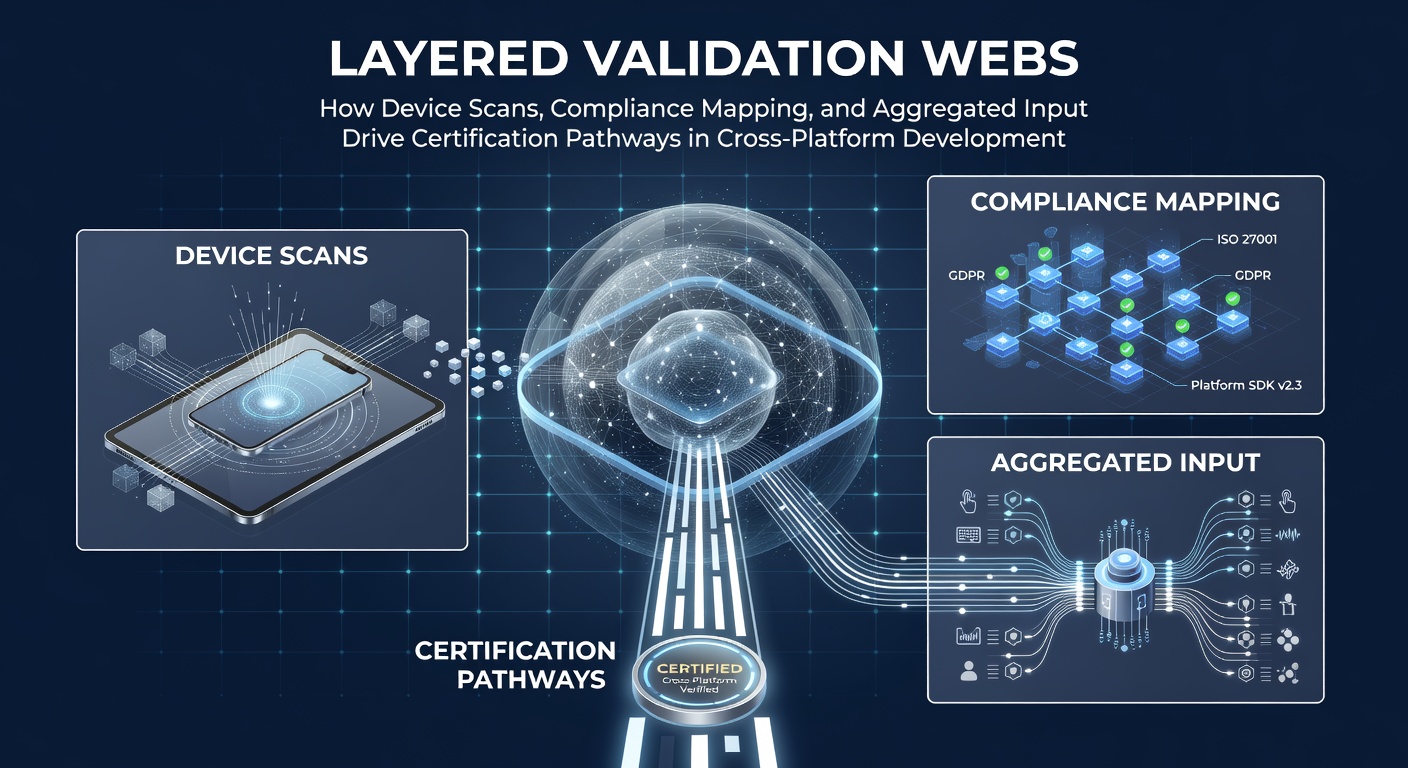
Layered Validation Webs: How Device Scans, Compliance Mapping, and Aggregated Input Drive Certification Pathways in Cross-Platform Development
In cross-platform development environments, layered validation webs have emerged as structured frameworks that integrate multiple assessment layers to support certification outcomes. These webs connect device scans with compliance mapping and aggregated input streams, creating pathways that developers follow when seeking platform approvals across diverse operating systems and hardware configurations. Data from industry reports shows that organizations adopting such integrated approaches often achieve certification timelines that align more closely with release schedules. Device scans form the foundational layer in many validation processes. These scans examine hardware specifications, operating system versions, and runtime behaviors on target devices, collecting metrics on memory usage, processor compatibility, and network performance. Researchers at institutions such as the University of Waterloo have documented how systematic device scanning reduces undetected variances when applications move between ecosystems like Android and iOS. The scans generate datasets that feed directly into subsequent compliance stages, allowing teams to identify potential conflicts before broader testing begins. Compliance mapping builds on scan results by aligning technical findings against regulatory and platform-specific requirements. This process involves overlaying scan data onto standards documents from bodies including the European Commission's digital single market initiatives and Australia's eSafety Commissioner guidelines. Teams create visual or database-driven maps that highlight gaps between current implementation states and required thresholds, such as data privacy rules or accessibility benchmarks. In May 2026, updates to cross-border data protocols are scheduled to take effect, prompting developers to refresh their mapping exercises with new criteria introduced by Canadian digital standards authorities. Aggregated input supplies the dynamic element that keeps validation webs responsive. This component pulls together logs from automated testing suites, performance reports generated during beta deployments, and structured feedback from distributed user cohorts. Observers note that when aggregated input flows continuously into the web structure, certification pathways adapt more readily to emerging issues. Studies published by IEEE indicate that systems incorporating real-time aggregation demonstrate measurable improvements in issue resolution rates across multi-device rollouts. The interaction between these layers produces certification pathways that reflect both static requirements and evolving conditions. Device scan outputs trigger compliance map revisions, while aggregated input introduces new variables that refine scan priorities over time. One documented case involved a development team working on productivity software for enterprise clients, where initial device scans revealed processor-specific rendering differences that compliance mapping then linked to regional accessibility mandates. Aggregated input from pilot users later highlighted network latency patterns that prompted targeted re-scans on additional device models. Section structures within layered validation webs often include dedicated nodes for each component. These nodes operate through defined interfaces that pass structured data between stages, minimizing manual handoffs. Practitioners report that establishing clear data schemas for scan outputs and compliance annotations supports smoother transitions when teams scale across additional platforms. The approach has seen adoption in sectors handling sensitive information, where certification demands explicit documentation of each validation step. External frameworks influence how validation webs are constructed. Standards from the National Institute of Standards and Technology in the United States provide reference architectures that developers adapt for their specific ecosystems. Integration with these frameworks allows organizations to demonstrate alignment during third-party audits without rebuilding entire assessment pipelines. In practice, this means compliance maps can reference established control families while incorporating scan-derived evidence. Challenges arise when data volumes from aggregated input exceed processing capacities within existing web configurations. Teams address this by implementing filtering mechanisms that prioritize inputs based on severity indicators derived from prior compliance mappings. Such prioritization keeps the certification pathway focused on elements that carry the greatest regulatory weight. 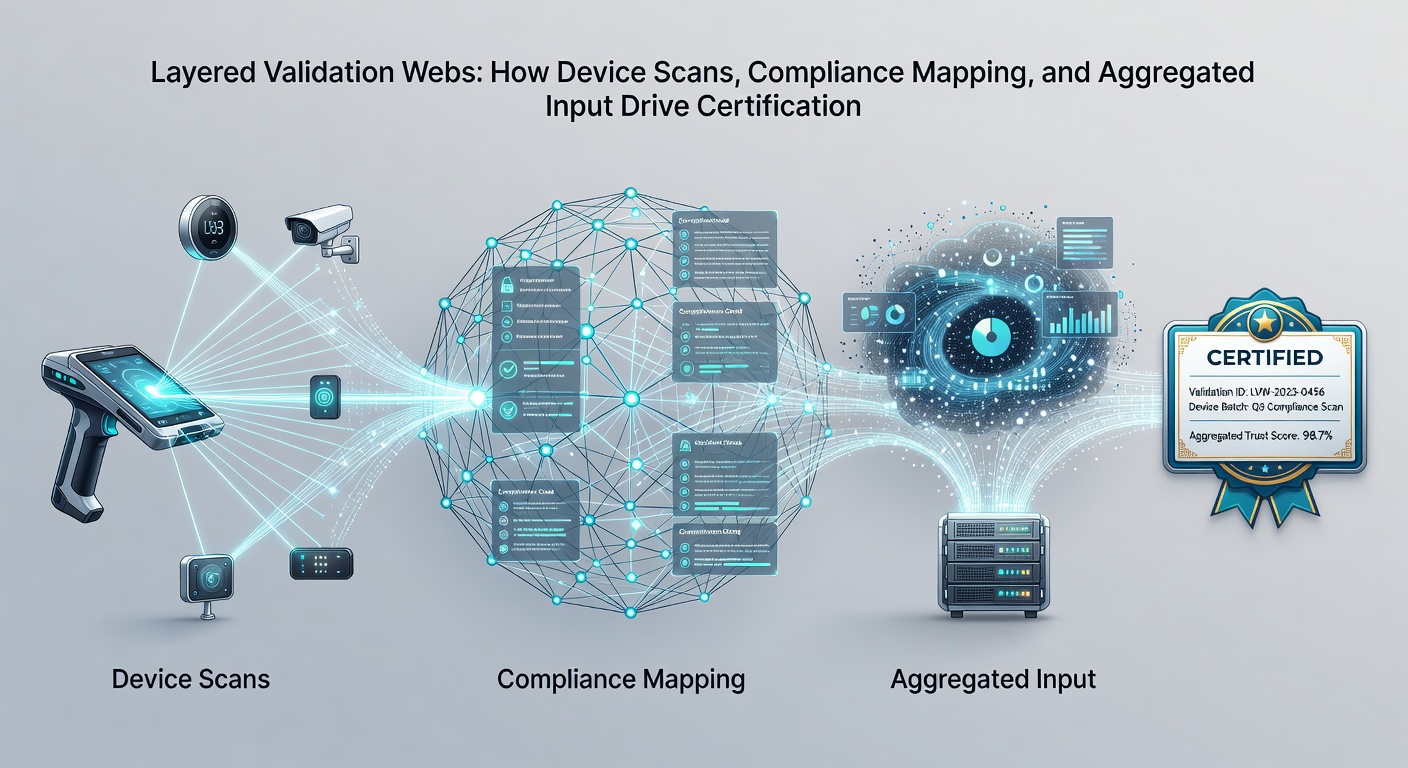 Future developments in validation web architecture point toward increased automation of layer transitions. Machine learning models trained on historical scan and mapping datasets are being tested to predict compliance gaps before aggregated input arrives. Early trials coordinated through research partnerships in the Asia-Pacific region suggest these predictive elements could shorten the interval between initial device evaluation and final certification submission. The overall structure of layered validation webs supports traceability requirements that many certification programs now enforce. Each node maintains records of inputs received and outputs produced, creating audit trails that link device-level findings to final approval decisions. Regulatory updates scheduled for mid-2026 emphasize the need for such traceability in cross-platform contexts, particularly where applications handle user data across jurisdictions. Developers who maintain active validation webs find that incremental refinements to any single layer propagate benefits throughout the pathway. Adjustments to scan parameters based on new aggregated input, for instance, automatically surface updated compliance considerations without requiring separate mapping reviews. This interconnected quality distinguishes layered approaches from sequential checklists that lack feedback mechanisms between stages.