Mapping Player Input Systems to Validation Chains Throughout Gaming Software Development
Written by Nils Sullivan · Jun 12, 2026
Mapping Player Input Systems to Validation Chains Throughout Gaming Software Development
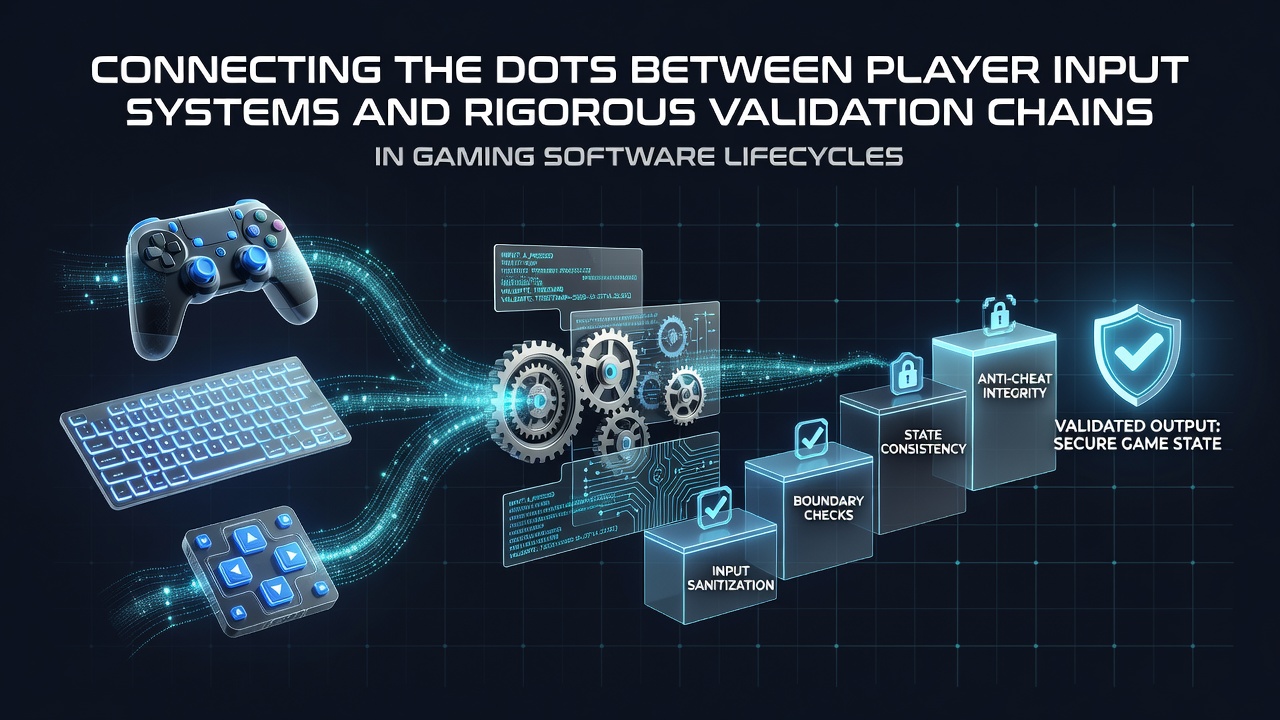
Player input systems encompass the hardware and software interfaces that translate user actions into game responses, ranging from keyboard mappings and controller layouts to touch gestures and motion sensors, while validation chains represent the sequential testing protocols that verify these interactions function correctly across development milestones. Data from industry reports shows these two elements intersect at multiple points in a game's lifecycle, where input handling code undergoes repeated checks to ensure consistency before release.
Core Components of Player Input Systems
Modern gaming platforms rely on standardized input protocols that developers integrate during early design phases, and these protocols must accommodate variations in device latency, button configurations, and network synchronization. Research indicates that input systems often incorporate abstraction layers which separate raw hardware signals from game logic, allowing the same code base to support multiple controller types without extensive rewrites. Observers note that this abstraction becomes critical when titles target cross-platform releases, since each ecosystem enforces distinct timing requirements and input buffering rules.
Engine documentation reveals that input polling rates typically range from 60 to 120 hertz depending on the target hardware, with validation procedures checking whether these rates remain stable under load. Studies conducted by academic groups have examined how drift in analog sticks or touch sampling errors propagate through subsequent processing stages, creating measurable differences in gameplay responsiveness across devices.
Structure of Validation Chains in Development Cycles
Validation chains consist of automated unit tests, integration suites, and compliance audits that run at predefined intervals throughout production, each stage building on the results of the previous one. Figures from development tool vendors demonstrate that input-related test cases account for a substantial portion of automated checks because even minor deviations in input mapping can affect core gameplay loops. These chains incorporate both deterministic replay tests and randomized stress scenarios to expose edge cases that manual review might overlook.
During the pre-production phase teams establish baseline input validation criteria, after which later stages add platform-specific constraints such as certification requirements from console manufacturers. In June 2026 several engine providers released updated validation modules that include expanded support for emerging input standards, reflecting ongoing industry efforts to align testing frameworks with new hardware releases.
Intersections Between Inputs and Validation Processes
Input handling modules enter validation chains at the unit testing level, where individual functions receive simulated signals to confirm correct event dispatching and state updates. Integration tests then combine these modules with rendering and physics systems, revealing timing discrepancies that only appear when multiple subsystems operate together. Compliance audits at the end of each milestone verify that input behavior meets external standards set by platform holders and regional regulatory bodies.
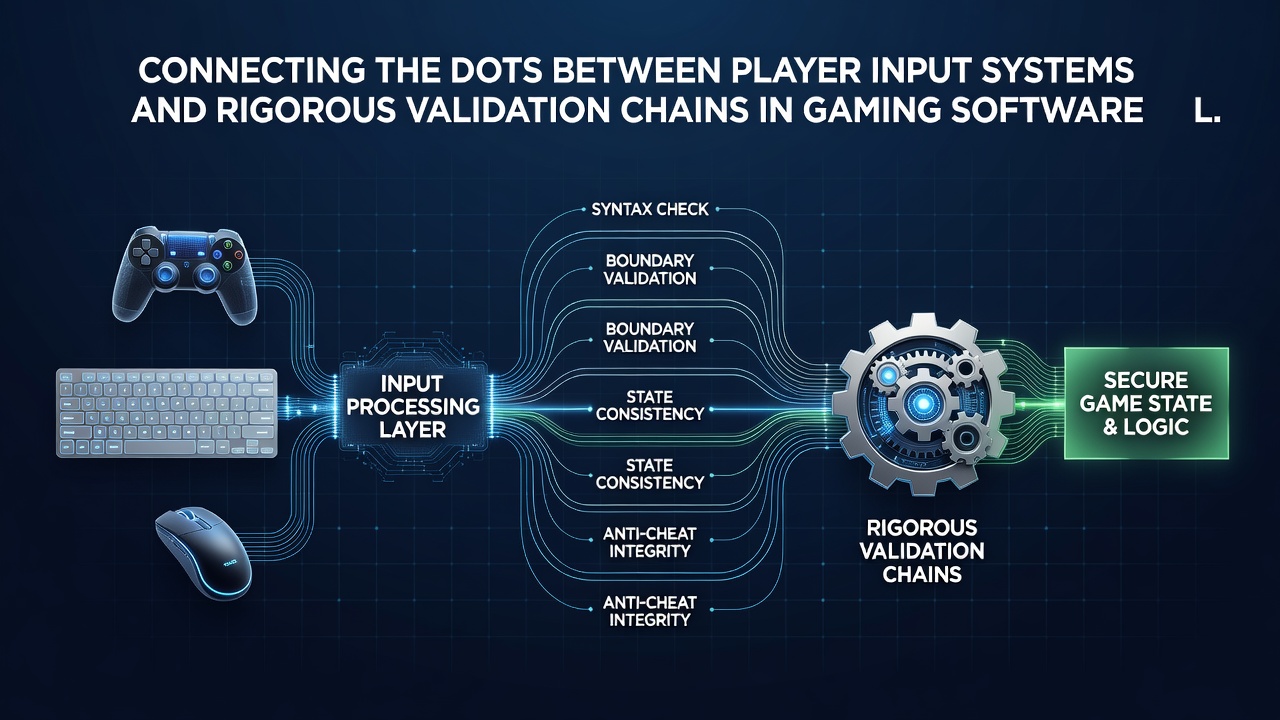
Case examples from large-scale projects illustrate how early detection of input desynchronization prevents costly rework later in the cycle. One study tracked a title that identified latency spikes during network play only after input validation tests incorporated simulated packet loss, prompting adjustments to buffering logic before beta testing began. Such findings underscore the value of embedding comprehensive input checks within broader validation sequences rather than treating them as isolated tasks.
Practical Integration Patterns Observed in Current Projects
Development teams frequently adopt continuous integration pipelines that trigger input validation suites whenever code changes affect control schemes, ensuring rapid feedback on potential regressions. Metrics collected across multiple studios indicate that projects employing layered validation achieve higher pass rates during final certification because input edge cases receive coverage at every stage. External organizations, including the Entertainment Software Association, have published guidelines that encourage standardized input testing methodologies to reduce platform-specific failures.
Additional research from European academic consortia has explored machine-learning approaches to predict input failure modes based on historical test data, offering teams predictive alerts before problems surface in live environments. These approaches complement traditional deterministic testing by highlighting patterns that might otherwise require extensive manual exploration.
Conclusion
Player input systems and validation chains form interdependent elements within gaming software lifecycles, with each input abstraction layer feeding directly into successive testing gates that confirm functional integrity. Evidence from ongoing projects demonstrates that structured connections between these domains reduce downstream defects and support smoother certification pathways. Continued refinement of both input handling techniques and validation protocols remains essential as hardware diversity expands and new interaction paradigms emerge.