Pathways of Assurance: Bug Detection and Certification Integration in Independent Game Production
Written by Devon Schröder · Jun 26, 2026
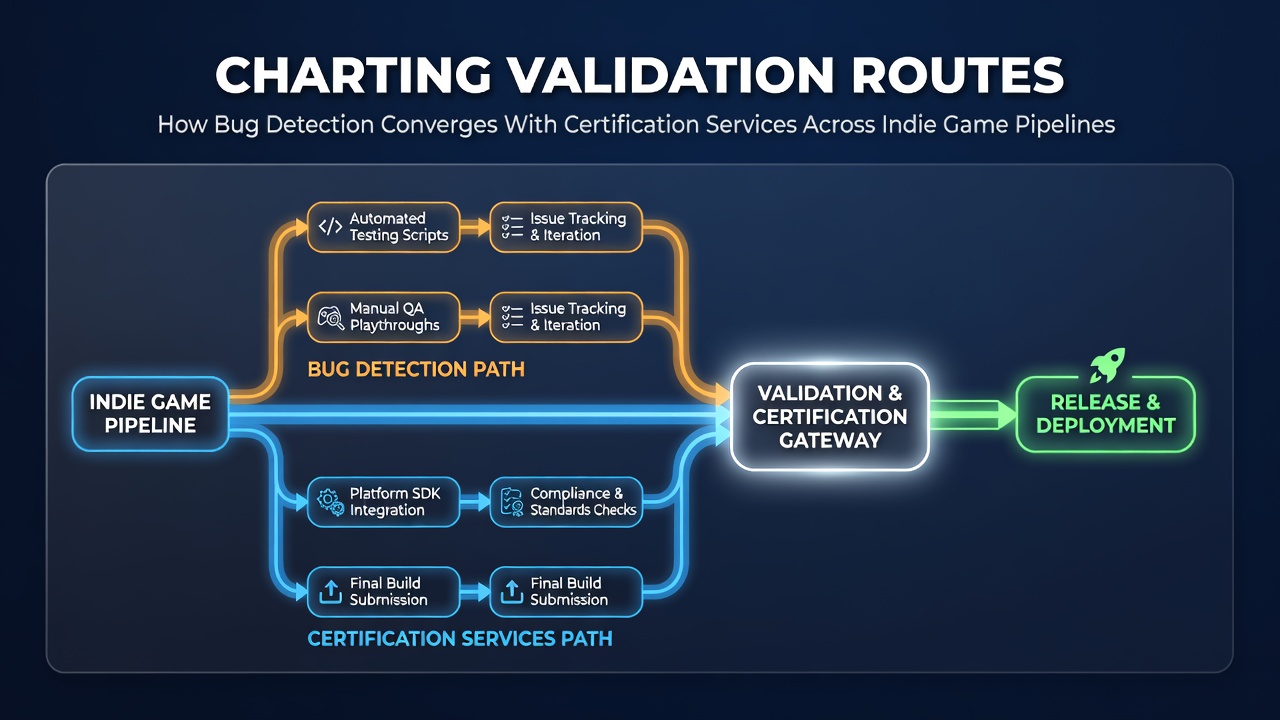
Pathways of Assurance: Bug Detection and Certification Integration in Independent Game Production
Independent game development pipelines have evolved into complex sequences where bug detection methods align closely with certification requirements, creating structured pathways that guide projects from initial builds toward approved releases. Teams track defects through automated scanners and manual reviews while simultaneously preparing documentation for external evaluators who verify compliance with platform standards. This integration ensures that issues identified early influence later approval stages, reducing delays that might otherwise occur when certification bodies encounter unresolved problems.
Tracing Defect Identification Within Pipeline Stages
Bug detection operates across multiple layers of an indie project, beginning with code-level analysis during prototyping and extending through playtesting phases that simulate real user interactions. Developers employ static analysis tools to flag syntax errors and memory leaks, then transition to dynamic testing environments where runtime behaviors reveal inconsistencies in gameplay mechanics or network responses. Research from the International Game Developers Association indicates that studios incorporating iterative detection cycles report fewer certification rejections, as problems surface before formal submissions begin.
Observers note that indie teams often combine open-source utilities with proprietary scripts to map error patterns specific to their engine choices, whether Unity, Unreal, or custom frameworks. These mappings feed directly into certification checklists, allowing teams to address platform-specific rules around accessibility features or data privacy protocols before evaluators examine the final build. In June 2026, updates to cross-platform certification guidelines from bodies like the Entertainment Software Association are expected to emphasize automated reporting formats that sync detection logs with compliance databases.
Convergence Points Between Detection and Approval Mechanisms
Certification services function as gatekeepers that require evidence of thorough bug resolution, turning detection outputs into formal verification steps. When a defect log shows recurring crashes under certain hardware configurations, certification reviewers demand additional test cases that confirm fixes across target devices. This convergence creates feedback loops where certification feedback refines detection priorities, directing resources toward high-impact areas such as input handling or save system integrity.
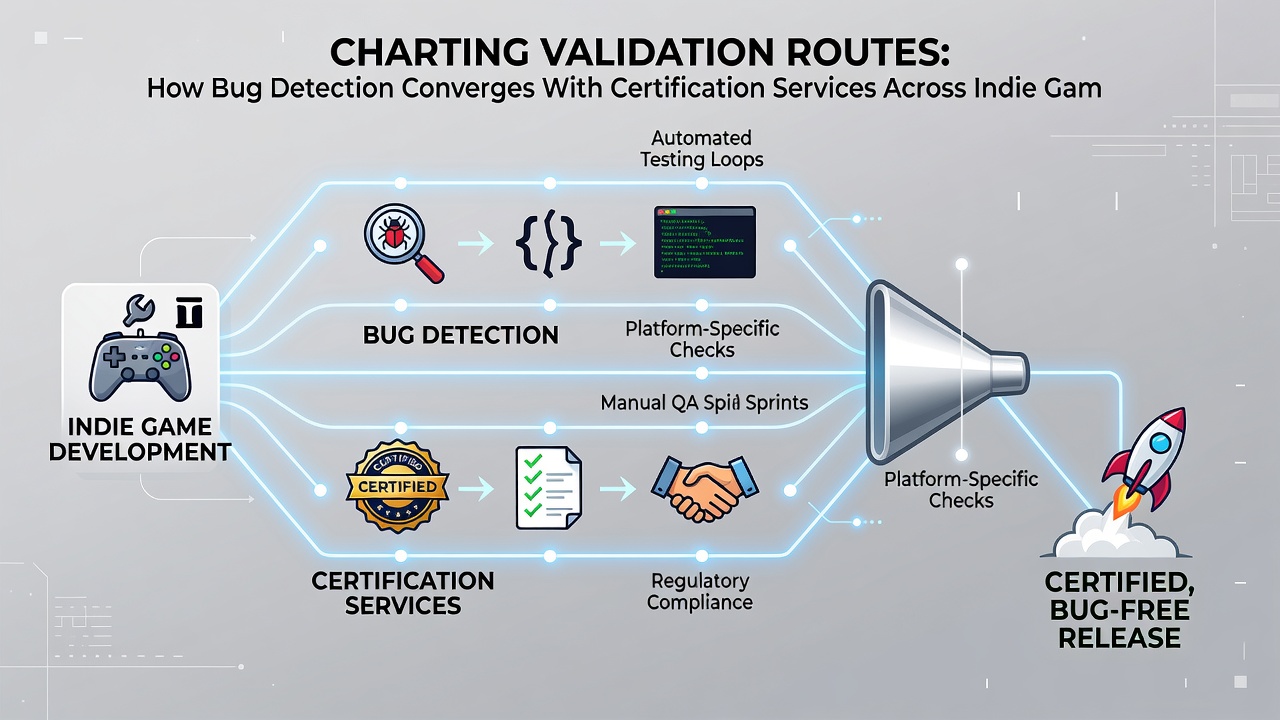
Those who've examined pipeline data observe that projects using shared dashboards between detection teams and certification coordinators experience smoother transitions, since both groups reference the same issue trackers and resolution timestamps. Figures from university studies at institutions like the University of Waterloo reveal that synchronized workflows cut average approval times by measurable margins, particularly for titles targeting multiple storefronts with differing technical thresholds.
Practical Examples Across Indie Studios
Take one development group that integrated real-time bug tracking with certification preparation during their multiplayer title rollout. They mapped every detected network desync to specific certification criteria around latency handling, submitting annotated reports that satisfied evaluator queries without additional rounds of testing. Another studio working on a narrative-driven experience aligned its accessibility audits with certification mandates for subtitle accuracy and color contrast, ensuring detection scripts flagged violations before the formal review process commenced.
What's interesting is how these alignments extend beyond technical fixes to encompass documentation practices. Teams compile detection histories into compliance portfolios that demonstrate proactive identification and remediation, satisfying requirements from regional authorities focused on consumer protection in digital products. Data from reports issued by the Australian Competition and Consumer Commission highlight similar patterns in software validation across entertainment sectors, underscoring the value of traceable pathways.
Emerging Patterns in 2026 Pipeline Management
As indie pipelines mature, shared validation frameworks gain traction, allowing smaller teams to leverage aggregated detection data when pursuing certifications for emerging platforms. Automated bridges between bug databases and certification portals reduce manual transcription errors, while standardized reporting templates ensure consistency across diverse project scopes. Experts have observed that these patterns support broader industry shifts toward continuous compliance rather than end-stage reviews alone.
Conclusion
Indie game pipelines demonstrate clear convergence between bug detection and certification services through mapped workflows, shared data structures, and iterative refinements that connect early defect identification with final approval outcomes. Studios that embed these connections within their processes achieve more predictable release timelines while meeting platform and regulatory expectations across varied markets.