Player Narratives Shaping Hardware Validation Protocols for Upcoming Console Generations
Written by Nils Sullivan · Aug 7, 2026
Player Narratives Shaping Hardware Validation Protocols for Upcoming Console Generations
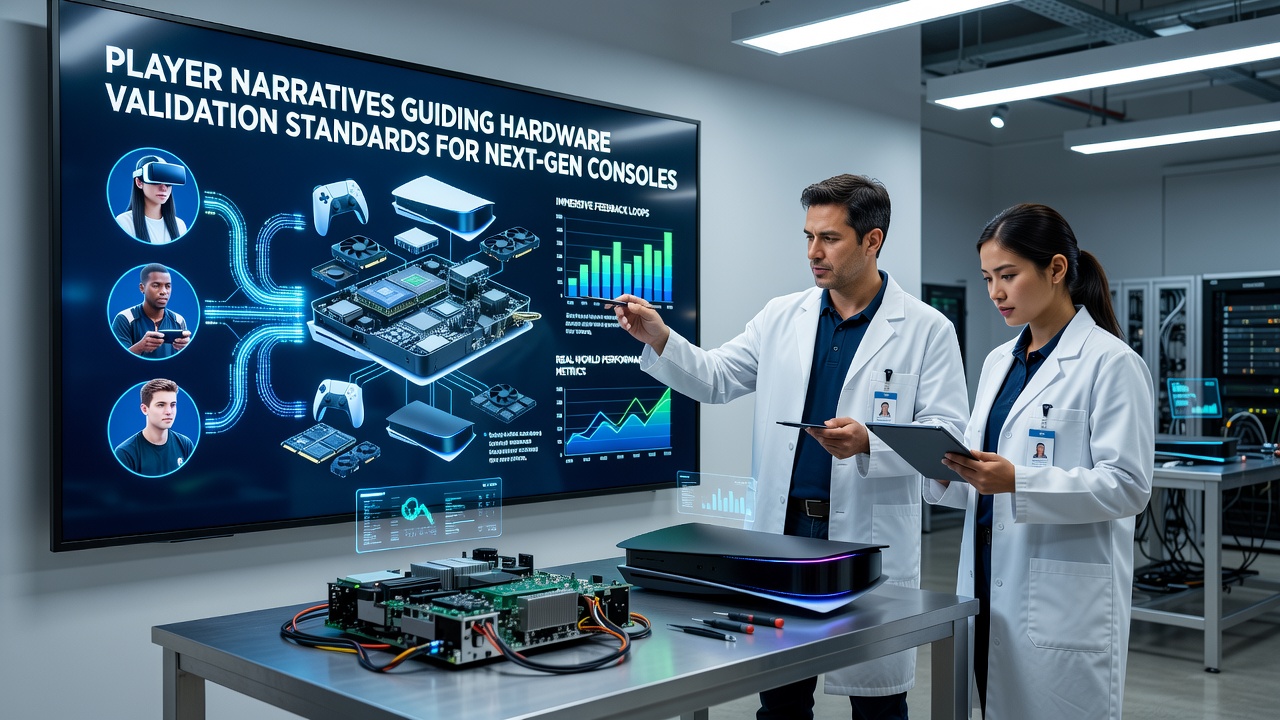
Player narratives collected through beta programs, community forums, and post-launch surveys have begun directing hardware validation protocols at major console manufacturers, and this shift gained momentum as development cycles for the next hardware wave accelerated in 2025. Data from industry reports indicate that narrative patterns around input latency, thermal throttling during extended sessions, and controller ergonomics now feed directly into standardized test suites used by engineering teams. Researchers at several universities have documented how aggregated player accounts influence the weighting of specific stress tests, particularly those simulating hours-long multiplayer engagements where hardware must maintain consistent frame pacing without external cooling assistance.
Tracing Narrative Inputs to Validation Criteria
Engineers review thousands of player-submitted descriptions each quarter, then map recurring themes to measurable hardware parameters such as sustained clock speeds under variable load and response times across different wireless controller configurations. In one documented workflow, clusters of reports describing unexpected disconnects during peak network traffic prompted revisions to Bluetooth coexistence testing standards that now incorporate simulated interference patterns drawn from real urban environments. Those who've studied the process note that validation teams translate qualitative accounts into quantitative thresholds by cross-referencing narrative frequency with telemetry logs captured during controlled play sessions.
Standards organizations have started publishing updated guidelines that explicitly reference player-derived scenarios. For instance, the European Games Developer Federation released a 2025 framework document outlining how hardware certification must include endurance trials based on documented player complaints about grip fatigue and button responsiveness after prolonged use. Similar updates appeared from North American trade groups, which incorporated narrative clusters around visual artifacts in high-dynamic-range modes into their compliance checklists. These changes reflect a broader movement toward validation methods that treat player accounts as primary data sources rather than supplementary anecdotes.
Integration of Feedback Systems in 2026 Testing Cycles
By August 2026, several console development programs had implemented automated pipelines that ingest player narrative data alongside traditional sensor readings from prototype units. The pipelines flag hardware behaviors that match frequently described issues, such as uneven heat distribution across chassis surfaces or audio crackling under simultaneous voice chat and game audio loads. Validation engineers then adjust test parameters to reproduce those conditions more accurately, often extending trial durations or introducing multi-player synchronization demands that mirror the scenarios players described.
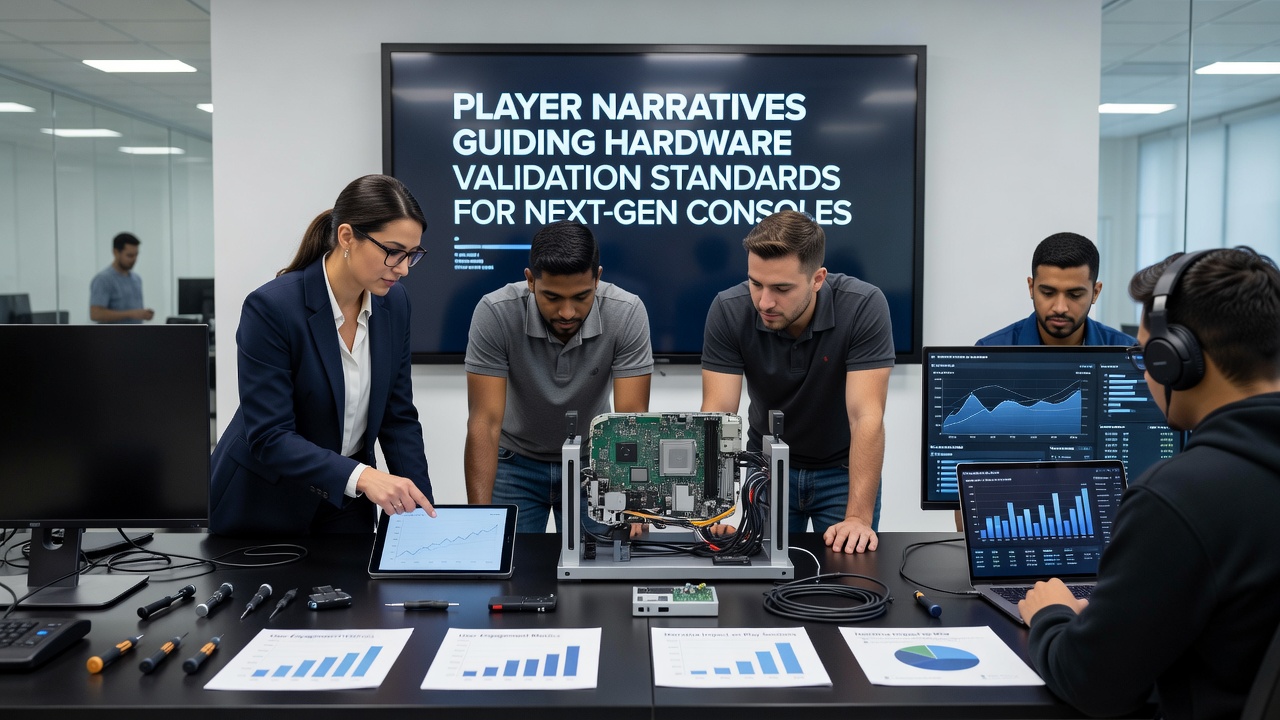
Academic studies from institutions in Asia have examined how these integrated systems affect certification timelines. One analysis of Japanese hardware programs found that incorporating narrative-weighted tests increased early detection of vibration-related component wear by approximately 18 percent compared with earlier cycles that relied solely on scripted benchmarks. Canadian research groups reported parallel findings in wireless connectivity validation, where player accounts of signal dropouts in crowded apartment settings led to expanded test environments that replicate multi-device interference more realistically.
Cross-Platform Considerations and Emerging Metrics
Validation standards now account for cross-platform deployment scenarios in which the same game title runs on multiple console architectures. Player narratives describing performance differences across devices have prompted the creation of comparative test matrices that evaluate frame consistency, input mapping accuracy, and power draw under identical gameplay sequences. Industry associations in Australia have contributed guidelines that require manufacturers to document how narrative-derived edge cases influence power management algorithms across handheld and stationary form factors.
Observers note that these evolving protocols emphasize reproducibility of player-reported conditions over abstract maximum-load scenarios. Test suites increasingly include variable session lengths, mixed input methods, and background system processes that reflect typical household usage patterns extracted from aggregated accounts. Government-affiliated research bodies in the European Union have begun referencing such methods in their recommendations for energy efficiency labeling of gaming hardware, tying validation outcomes to measurable improvements in sustained performance under narrative-guided conditions.
Conclusion
Hardware validation for next-generation consoles continues to incorporate structured analysis of player narratives as a core component of certification pathways. The resulting standards reflect measurable connections between reported experiences and technical parameters, supported by updated frameworks from multiple regional organizations and research institutions. Continued refinement of these processes depends on consistent data integration between narrative sources and laboratory measurements across global development programs.