Unraveling How Synthesized Input Channels Align Protocol Checks With Component Scans in Platform Validation Chains
Written by Nils Sullivan · Jun 24, 2026
Unraveling How Synthesized Input Channels Align Protocol Checks With Component Scans in Platform Validation Chains
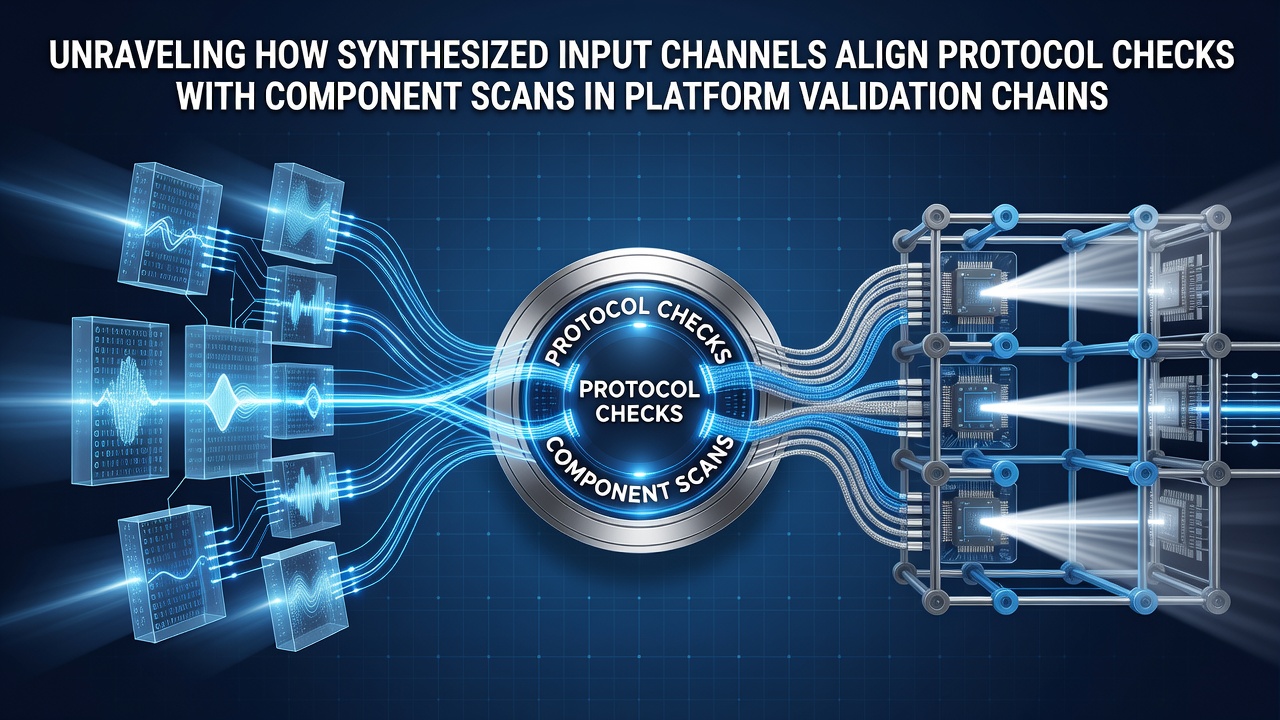
Platform validation chains depend on precise coordination between synthesized input channels, protocol checks, and component scans to verify system integrity across diverse hardware and software environments, and researchers continue to map these interactions as development pipelines grow more complex. Synthesized input channels generate controlled test signals that mimic real-world user interactions while protocol checks verify adherence to communication standards and component scans inspect individual modules for compliance with design specifications.
Core Mechanisms Behind Input Channel Synthesis
Engineers construct synthesized input channels by combining algorithmic models with recorded usage patterns so that test data flows through validation stages in sequences that reflect actual deployment conditions. These channels integrate multiple data streams, including timing variations and error injection points, which allows protocol checks to operate on inputs that carry both expected and edge-case characteristics at the same time.
Studies from institutions such as the National Institute of Standards and Technology have documented how input synthesis improves detection rates for protocol deviations by feeding structured yet variable payloads into each validation layer. Component scans then examine memory footprints, register states, and interface responses while the synthesized signals remain active, creating a feedback loop that updates scan parameters in real time.
Alignment Process Between Checks and Scans
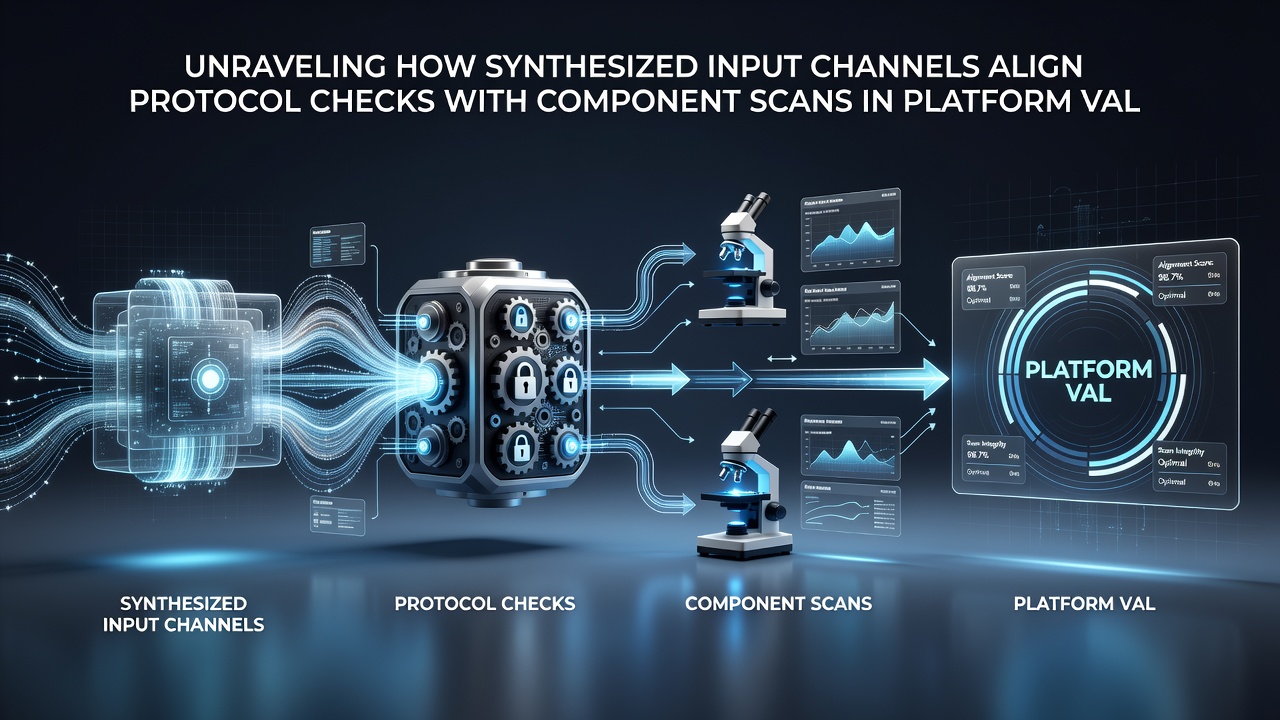
Alignment occurs when protocol checks export metadata about packet structure and timing constraints directly to the component scan engines, enabling those engines to adjust their inspection windows accordingly. Data from industry reports indicate that this metadata exchange reduces false positives in scan results because the scans receive context about which protocol states are currently under test.
Validation frameworks often employ shared data buses that carry both the synthesized inputs and the protocol metadata, ensuring that component scans operate on synchronized snapshots rather than static system images. Observers note that this synchronization becomes critical in cross-platform environments where different operating systems interpret the same protocol fields with slight variations in endianness or padding.
Implementation Patterns Observed in 2026
By June 2026 several validation toolchains had adopted modular input synthesizers that allow teams to swap protocol templates without restarting the entire scan sequence. These updates permit rapid incorporation of new protocol revisions while maintaining continuity in component scan coverage across previously validated modules.
Research published by the European Committee for Standardization shows that organizations using these modular synthesizers report shorter validation cycles when introducing support for emerging interface standards. The synthesizers generate channel configurations that embed protocol constraints as annotations, which component scan routines read to prioritize certain memory regions or register sets during inspection.
Challenges in Maintaining Alignment at Scale
Scaling these aligned systems introduces latency when the volume of synthesized inputs exceeds the processing capacity of the protocol check layer, forcing component scans to operate on partially updated metadata. Teams address this by partitioning the validation chain into parallel lanes, each handling a subset of input channels and corresponding scan tasks.
Figures from academic consortia reveal that load-balancing strategies can maintain alignment accuracy above 95 percent even when input rates increase by an order of magnitude. Yet the same studies caution that network jitter between distributed validation nodes can still desynchronize the metadata exchange between checks and scans.
Future Directions for Validation Chains
Continued refinement of synthesized input channels focuses on incorporating machine-learning models that predict which protocol states are most likely to trigger component-level anomalies. These predictive models feed forward-looking parameters into both the protocol check and component scan stages, allowing proactive adjustment of inspection depth.
Validation platforms that integrate such models demonstrate improved coverage metrics when evaluated against historical defect databases maintained by standards organizations in Australia and Canada. The integration remains dependent on consistent data formats that allow synthesized inputs, protocol metadata, and scan outputs to travel through the chain without translation overhead.
Conclusion
Platform validation chains achieve reliable outcomes when synthesized input channels supply context-rich data that protocol checks translate into actionable directives for component scans. Continued measurement of alignment accuracy across different hardware configurations provides the empirical basis for further optimization of these interconnected processes.