Validation Pathways in Gaming Certification: Integrating Feedback Aggregation with Hardware Benchmarks
Written by Zara Vogel · Jun 21, 2026
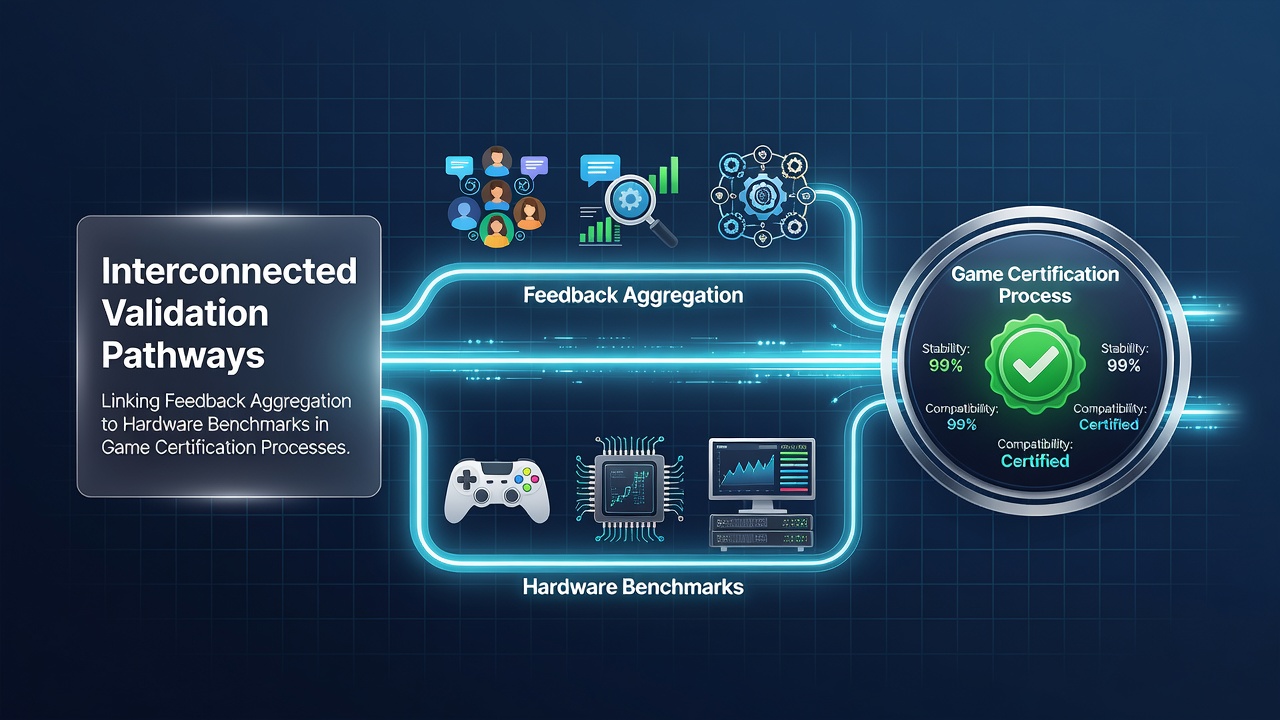
Validation Pathways in Gaming Certification: Integrating Feedback Aggregation with Hardware Benchmarks
Game certification processes have evolved into complex networks where aggregated feedback from players connects directly with hardware performance benchmarks to determine whether titles meet release standards across multiple platforms. These pathways allow certification bodies to cross-reference real-world usage patterns against controlled device tests, creating verification routes that reduce the risk of post-launch issues in diverse environments.
Core Components of Modern Certification Frameworks
Certification teams compile data from thousands of user sessions into structured datasets that highlight recurring performance concerns while hardware laboratories run standardized stress protocols on target devices, and the two streams merge at key decision points during the approval cycle. Researchers at institutions tracking industry standards note that this merging step often occurs after initial software audits conclude, allowing teams to adjust test parameters based on patterns emerging from player reports rather than relying solely on predefined checklists.
Aggregating Player Input for Actionable Insights
Feedback aggregation systems collect structured and unstructured data from beta tests, early access releases, and post-launch patches then apply categorization algorithms to isolate hardware-specific complaints such as frame rate instability on particular graphics cards or thermal throttling during extended play sessions. Data from industry reports indicate that organizations processing these inputs can identify device clusters where problems concentrate, which then informs the selection of benchmark suites for deeper examination.
One developer group working on a cross-platform title in early 2025 discovered through aggregated reports that certain mobile chipsets exhibited consistent input lag under high particle counts, prompting the certification team to expand its hardware evaluation matrix before final approval.
Hardware Benchmarks as Objective Anchors
Benchmark protocols measure metrics including frame delivery consistency, power draw under load, and memory allocation efficiency across representative device configurations, producing quantitative scores that certification panels compare against established thresholds. These measurements provide fixed reference points because they occur in isolated laboratory conditions where variables remain controlled, unlike the variable network and thermal environments reported by players.
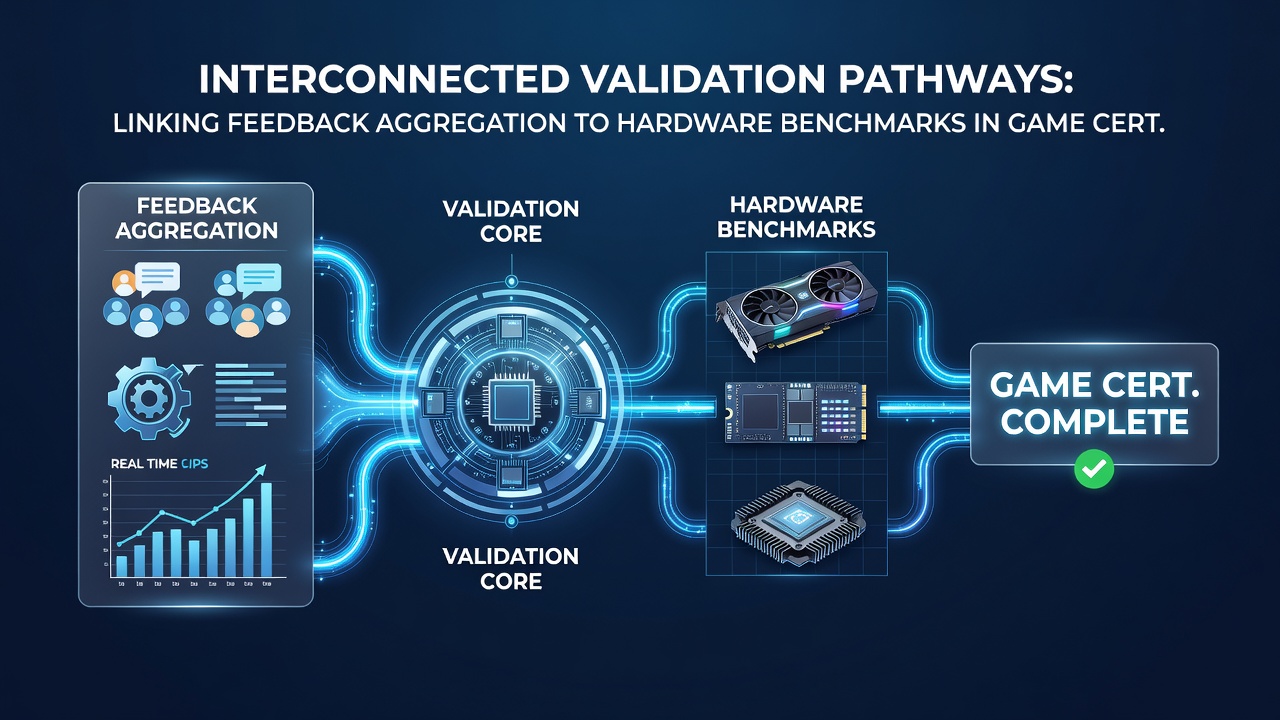
Standards organizations have documented how benchmark results serve as calibration tools for feedback data, allowing analysts to determine whether reported issues stem from hardware limitations or from software implementation choices. In June 2026 several certification programs updated their reference device lists to include newer mobile and console configurations, requiring teams to rerun benchmark suites against the expanded set whenever aggregated feedback flagged emerging compatibility concerns.
Connecting the Two Streams During Approval Cycles
Certification workflows route aggregated feedback summaries to hardware testing teams so they can prioritize device configurations that show elevated problem rates in player data, and the resulting benchmark outcomes feed back into certification reports to justify pass or conditional approval decisions. This bidirectional flow means that a cluster of reports about overheating on a specific laptop model can trigger targeted thermal testing, while clean benchmark results on that model can downgrade the priority of similar future reports.
Industry associations such as the Entertainment Software Association have tracked how this linkage reduces redundant testing cycles because teams focus resources on configurations already highlighted by player input rather than testing every possible hardware variant equally.
Examples from Recent Certification Projects
Teams certifying a major multiplayer release in late 2025 used feedback aggregation dashboards to isolate reports of stuttering on mid-range GPUs then directed benchmark engineers to apply variable load scripts that reproduced the reported conditions, confirming that driver-level memory management rather than game code caused the drops. The combined dataset supported a conditional certification requiring a day-one driver advisory for affected hardware.
Another project involving a console-exclusive title mapped controller latency complaints from early testers onto specialized input benchmark rigs, revealing that firmware variations in third-party peripherals produced measurable delays outside acceptable ranges and leading to updated accessory compatibility listings before launch.
Emerging Standards and Documentation Practices
Regulatory and industry bodies across regions have begun requiring explicit mapping between feedback categories and benchmark protocols in submitted certification dossiers, creating audit trails that demonstrate how player data influenced hardware evaluation priorities. European research consortia and North American standards groups both emphasize documentation of these linkages because they allow independent reviewers to verify that certification decisions rest on both subjective experience data and objective performance measurements.
Observers tracking these developments note that the practice also supports post-release monitoring, since ongoing feedback streams can trigger re-benchmarking of updated hardware configurations without restarting entire certification processes from scratch.
Conclusion
Interconnected validation pathways continue to shape game certification by ensuring that aggregated player feedback informs hardware benchmark selection while benchmark outcomes provide objective context for interpreting those same reports. This structure supports consistent decision-making across platforms and device generations, and documentation requirements introduced around mid-2026 further formalize the connections between the two data streams. Certification programs that maintain clear linkages between these elements demonstrate measurable improvements in identifying device-specific issues before widespread release.